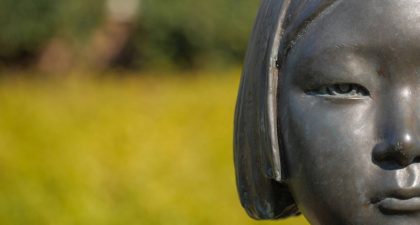
Kozue Uehara and Wendy Matsumura discuss the future of Okinawan anti-US base activism amidst heightened state repression and regional militarization.
Kozue Uehara & Wendy Matsumura
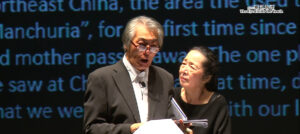
This is an expanded version of a conversation that took place between Kozue Uehara and Wendy Matsumura at the end of the screening of the documentary film, Earth’s Greatest Enemy at Tokyo University of Foreign Studies (TUFS) on May 29, 2026. The screening, the first viewing of the documentary in Japan, was well attended, with scholars, activists, students, and community members attending from many parts of the country. Audience questions toward the end of the session revealed an anxiety amongst many about the future of anti-US base activism due to an accident at one of the protest sites that led to the drowning death of an anti-base activist and a high school student who had been there as part of a school trip with a “peace education” component. Audience members expressed concern that anti-base protest, a central feature of progressive politics in Okinawa and a particularly urgent node of struggle today given the Japanese government’s pursuit of further militarization in support of the US war on Iran, would become an even greater target of state repression due to the accident. Uehara and Matsumura’s conversation and interaction with the audience on this issue is reproduced here.
Uehara: Thank you very much, Wendy, for taking the time to join us today during your stay in Tokyo. We have just finished screening Earth’s Greatest Enemy. To begin, could you share your overall impressions of the film? I also understand that it was screened at UC San Diego, where you teach. How did students and other audience members respond to it?
Matsumura: Thank you for inviting me to have this conversation with you. I watched Earth’s Greatest Enemy at UC San Diego when it was screened in the spring. My colleague brought the film and director Abby Martin to campus. Their introduction to the film resonated with me. They said that there was a contradiction that we have to confront, which is that we are watching this film that clearly targets the US military as the enemy of human life at a university that is built upon an actual U.S. Marine Corps base (where over a million soldiers received their marksmanship training), which was itself built atop stolen Indigenous Kumeyaay land, that sent over a hundred riot police who aimed their weapons against its own students and community members who set up a Gaza Solidarity Encampment two years prior to demand an end to UCSD’s complicity in the US-Israeli genocide against the Palestinian people.
As is the case here, turnout for the film was excellent. Many of the questions that audience members had for Abby had to do with how they should be taking the knowledge that they gained from the film – that the US military was the primary cause of the climate catastrophe, including ecocide, that poses a huge threat to the collective survival of humanity – into their own daily lives. Tackling a behemoth like the US military is not an easy task, but I was grateful that the film devoted quite a bit of time to interviewing groups, such as the Oʻahu Water Protectors and Native Hawaiian-led organizations in Hawaiʻi fighting the US Navy’s contamination of Red Hill, and anti-base protestors in Henoko, Okinawa, who offered examples of how to fight back in their own communities.
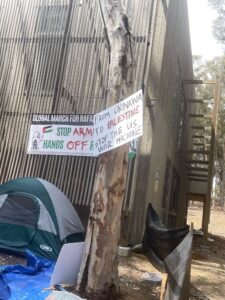
Uehara: There are two issues I wanted to ask you about today. The first concerns the sign shown on the slide [Figure 1]. I first saw this sign about two years ago. After Israel launched its military assault on Gaza, protests took place here in Tokyo. However, it seemed to me that the role of the United States was rarely addressed. Israel’s military assault on Gaza has been sustained by the support and global military presence of the United States—and Japan is one of the countries that has enabled that presence. Yet in many of the protests I observed in Tokyo, the presence of the U.S. military in Japan seemed to remain invisible.
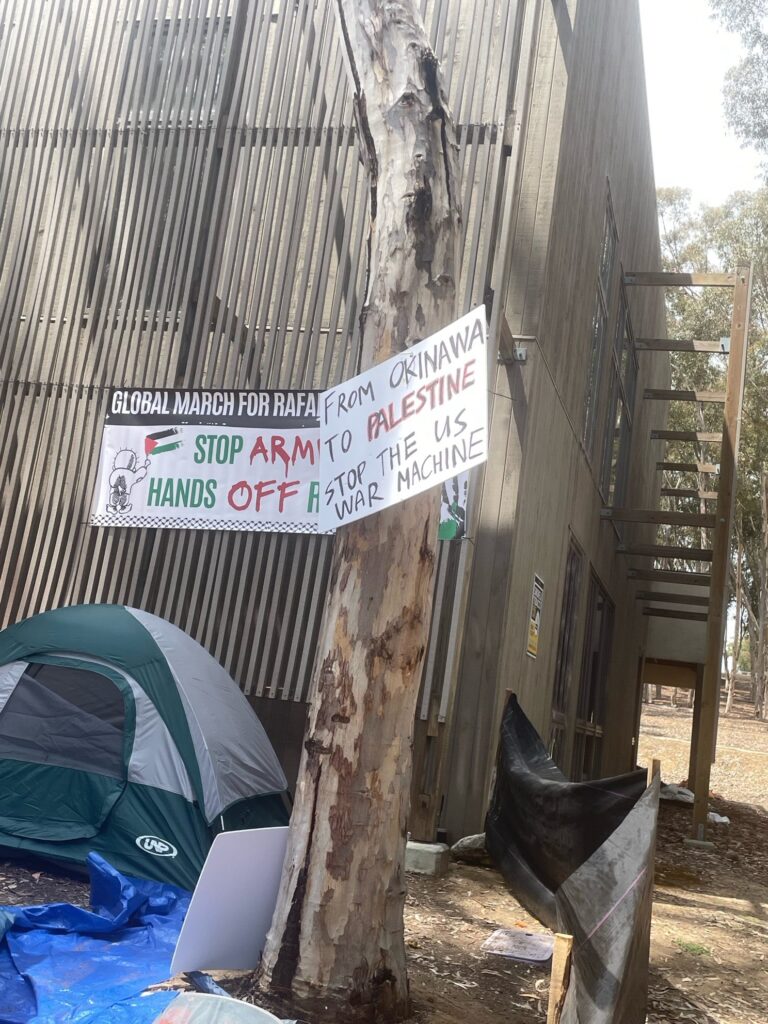
As I was thinking about how to make the connection between the ongoing violence in Gaza and the U.S. military presence in Japan more visible, I came across a Middle East Eye article by Adam Miyashiro and Nozomi Nakaganeku-Saito titled “From Okinawa to Palestine: How the US Military Machine Connects Occupied Territories.” It argues that the ongoing genocide in Gaza has been enabled by weapons and ammunition supplied by the United States and stored or deployed at U.S. military bases around the world, including Kadena Air Base. In doing so, it reveals how the circulation of the U.S. war machine makes this violence possible. It was also in this article that I first encountered the slogan: “From Okinawa to Palestine: Stop the U.S. War Machine.”
I had previously encountered the term “war machine” in a text by Peter Linebaugh, where he argues that attempts to destroy the global commons through “expropriation and exploitation” give rise to the war machine and its various mechanisms—in other words, the military-industrial complex.1 That made me curious about the circumstances in which you created this banner and what you hoped to convey through this phrase. You mentioned earlier that it was made during the encampment at UC San Diego. Could you tell us more about what was happening at the time and what ideas you hoped to express through these words?
Matsumura: I made this sign on the first day of the Gaza Solidarity Encampment as it was being set up. Already, there were university police and swarms of other non-police cops there to surveil us under the guise of campus safety. At the time, I was not thinking about the “US War Machine” as limited to a structure of military institutions that connects Camp Pendleton, a massive Marine Corp base not far from UCSD where 2,500 Marines were deployed to Iran in March to Kadena Air Base in Okinawa. I was interested in highlighting the relationship between imperialist warmaking in Okinawa and Palestine to the US university. UC San Diego received over $500 million in military-tied funding between 2017-2022 from various arms of the Department of Defense and private sponsors like Lockheed Martin, General Atomics, Raytheon, Boeing, and the Israeli Ministry of Defense. The University of California (UC) system figure for this timeframe is $2.3 billion.2 At an April 2024 Board of Regents meeting, the UC Chief Investment Officer announced that an estimated $32 billion of the UC system’s overall assets are invested in weapons manufacturing and related corporations. These staggering figures are available thanks to the tireless work of community members within the UC system – mostly students – who researched publicly available documents and databases to data on the US’s complicity in genocide and pushed for transparency.3 The scale and depth of the connections between the university system and the US military makes it an integral part of the US war machine. This information helped me understand why the managerial class of institutions cracked down so ruthlessly against protestors, including their own students, who exposed their university’s indispensable role in genocide, demanded accountability, and created their own spaces of learning and political education at the encampments they set up in the spring of 2024.
The film screening at UCSD was important because it was an opportunity to continue to reflect on the function of the research university as an integral node in the US war machine. It’s up to us to continue to draw out and fight to dismantle these connections because the genocide of the Palestinian people has merely entered a different phase.
Uehara: Earlier, I mentioned that many of the protests I have seen in Tokyo render the presence of the U.S. military in Japan invisible. At the same time, however, there have also been movements that explicitly connect Okinawa and Palestine. One example is the activism of Heianna Ruka, who is from Uruma City, Okinawa, and is active in Tokyo. In August 2025, together with a Palestinian friend living in Tokyo, she organized “LandBack Okinawa.” Then, following the attacks on Iran in March 2026, she quickly mobilized around seventy people for a protest in front of the U.S. Embassy in Tokyo. She argued that Okinawa has long been drawn into America’s wars and that its residents live with the fear that they themselves could become targets of attack. At the same time, she described the fact that Okinawa was being used as a launching point for attacks that killed people in Iran as a profound humiliation for Okinawa, whose people experienced the devastation of the Battle of Okinawa.
Of course, Okinawa’s use as a launching point for U.S. wars is by no means a recent development. Since the U.S. occupation of Okinawa began in 1945, military bases on the island have served as launching and logistical bases for operations on the Korean Peninsula in the 1950s, in Vietnam in the 1960s, in Lebanon in the 1980s, in the Persian Gulf in 1991, in Afghanistan in 2001, and in Iraq from 2003 to 2011. Now they have also supported the 2026 military attack on Iran.
As the article “From Okinawa to Palestine” points out, the network of U.S. military—including those in Okinawa—has kept troops, weapons, and command systems in a constant state of readiness for actual warfare through routine drills and training. It has also intensified joint live-fire military exercises in Okinawa, Guam, Hawai’i, the Philippines, and elsewhere.
What is important here is that all of this has been made possible by the Japanese government. As Yamashiro Hiroji says in Earth’s Greatest Enemy, “When we resist the U.S. military, it is the Japanese government that responds.” That reality is precisely the issue.
In response to protests against the U.S. military, the Japanese authorities have enforced laws such as the Special Criminal Law and the Road Traffic Act, bringing charges including obstruction of business, violations of the Public Offices Election Act, property damage, trespassing, and obstruction of official duties against residents and citizens protesting military base construction and military exercises. At the same time, police and riot police have been deployed and surveillance systems have been strengthened. Yet Article 17 of the U.S.–Japan Status of Forces Agreement grants the United States primary jurisdiction over crimes committed by U.S. military personnel in the course of their official duties, thereby limiting the ability of the Japanese authorities to detain them. In other words, the law has been enacted and enforced not to protect those who are affected by the military bases, but to sustain the bases themselves.
This situation emerged after Okinawa’s reversion to Japan. In the 1970s, people protesting the U.S. military’s live-fire artillery exercises across Prefectural Road 104 at Camp Hansen denounced the Japanese government as the “mastermind behind the exercises.” In a very literal sense, it was the Japanese government that enacted and enforced the relevant laws and mobilized police power, thereby enabling the U.S. military exercises to continue.
At that time, entering the impact area had become the only effective means of stopping the live-fire exercises. However, as the Naha Defense Facilities Administration Bureau erected fences around the impact area, the Okinawa Prefectural Police intensified their crackdown on protesters, and the Special Criminal Law was enforced, opportunities for such direct action became increasingly limited.
Matsumura: I learned from Ruka that “Landback Okinawa” has also organized or participated in protests against Obayashi Corporation and Nippon Koei, two companies that construct US military bases on Okinawa, as well as the Japanese Ministry of Defense. Nippon Koei, which in its former iteration, built infrastructure for Japan’s colonization of Korea, is involved in “development” projects in Palestine that further entrench colonial rule amidst ongoing genocide. “Landback Okinawa” makes the material links between the US government, its most enthusiastic partner in Northeast Asia, the LDP-led Japanese government, and Japanese multinational corporations that perpetuate genocide and profit from perpetual war in Okinawa and Palestine and beyond, visible.
Current prime minister Takaichi Sanae’s efforts to continue her predecessor Abe Shinzo’s political vision of accelerating the warmaking capabilities of the Japanese military is what the current protests in mainland Japan are responding to through demands that the government uphold article 9 of the postwar constitution. What needs to be acknowledged, however, is that the military and Japan’s war profiteering corporations like Mitsubishi and Hitachi have played an important role in securing, then maintaining the US’s hegemonic position in Asia since the 1950s. Reflecting on this longer historical trajectory may clarify why the call for the preservation of article 9 is wholly inadequate for addressing the primary contradiction of this moment, which is US-led imperialism.
The anti-US-Japan security treaty (Ampo) protests of the late 1950s offer an alternative framing that may get us closer to the necessary critique. As renewal of the 1951 treaty neared, a coalition of over 130 organizations led by the Council against Atomic and Hydrogen bombs (Gensuikyō), the Japan Communist Party (JCP), the All-Japan Federation of Students’ Self-Governing Associations (Zengakuren), the Japan Socialist Party (JSP), labor unions, and many others, brought down the sitting prime minister and convicted class A war criminal, Kishi Nobusuke for pushing through a renewed version of the US-Japan security treaty that would expand Japan’s military responsibilities on behalf of US efforts to weaken communism, instantiated in the Democratic People’s Republic of Korea (DPRK, or North Korea) and the People’s Republic of China (PRC). While they were not able to stop the security treaty from being renewed, the hundreds of thousands of protestors who filled the streets of Tokyo and other cities nationwide were united in their conviction that the treaty had to be annulled. Otherwise, there would be no possibility of peace, an equitable distribution of wealth, sovereignty, or freedom from complicity in imperialist warfare. They understood that the treaty’s very existence made it impossible on a fundamental level for the people or their government from being dragged into US wars. They also understood that far from protecting them, provisions like articles 4 and 6 of the treaty could be interpreted as authorizing the US military to be mobilized against them to maintain “peace and security.”
Okinawa was not yet at the top of mind for many of these anti-Ampo protestors in mainland Japan – this centering would only come with the commencement of the US bombing of Vietnam. But in Okinawa, which remained under formal US rule until 1972, the signing and renewal of the treaty were understood as acts that would further entrench conditions of wholesale colonial domination including economic dependency. An article in the February 20, 1962 edition of Jinmin, the organ paper of the Okinawa People’s Party anticipated that the revised treaty would accelerate the unification of US and Japan’s monopoly capitals and would force the expansion of the roles and responsibilities of the Japanese military for defense of US imperialism, including possible nuclear armament.4 The piece also predicted that the various branches of the Japanese military would increase its physical presence in the islands. In fact, a document published by the Okinawa branch of the Gensuikyō in 1976 outlines the way that three branches of the Japanese military, the Ground SDF (Special Defense Forces), the Maritime SDF, and the Air SDF built their own facilities on Okinawa after the US returned sovereign control over the islands to the Japanese government in 1972. They took over portions of land that the US military “released” upon reversion. Residents, who had hoped that Japanese rule would mean the return of their ancestral homelands to local communities, were disappointed by the reality that it resulted in closer coordination between the US and Japanese militaries to further the interests of US-led imperialism. The publication lists the advanced communications, training, and munitions facilities that the Japanese military built on Okinawa after reversion in order to further its role in strengthening US hegemony in the Asia/Pacific.5 The framework of bilateral, regional, and international relationships that bind the US and Japanese militaries together on Okinawa at devastating cost to its inhabitants has since intensified. Japanese protestors might want to incorporate lessons from this long history as they fight the Takaichi government. In particular, generations of activists in Okinawa have a wealth of knowledge about the wide range of weapons that past administrations have used against to divide and destroy their movements.
Uehara: There is one more question I would like to ask today. In 2018, you wrote an article titled “The Normal and Exceptional Forms of Enclosure in Okinawa: Going Beyond the So-Called Base Problem.” In it, you discuss the land struggle in Okinawa during the 1950s, when people resisted the lump-sum purchase of their land under the slogan, “Money lasts for a year, but land is for eternity.” What struck me most was that you did not portray Okinawa simply as a place where military bases exist. Rather, you described it as a place where the labor of Okinawan people—and even nature itself—is intensively mobilized to sustain U.S. military bases and reproduce war.
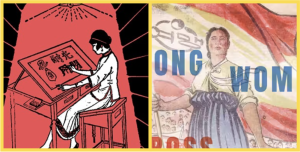
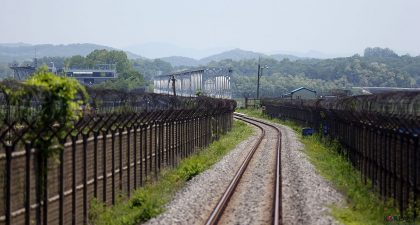
The article was published in 2018, just as landfill work for the Henoko base construction began. Mountains were being quarried, ports were being used to transport soil, and enormous amounts of taxpayer money were being spent every day on security personnel to prevent delays to the construction (Figures 2, 3, and 4).
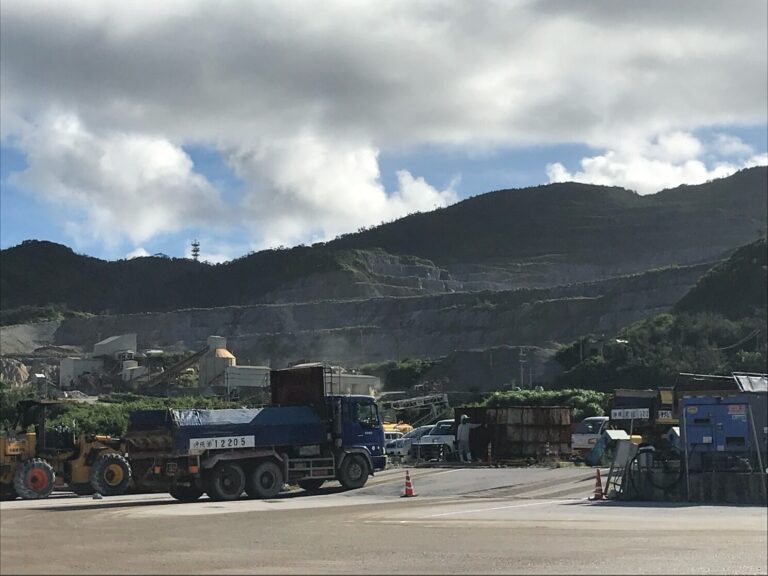
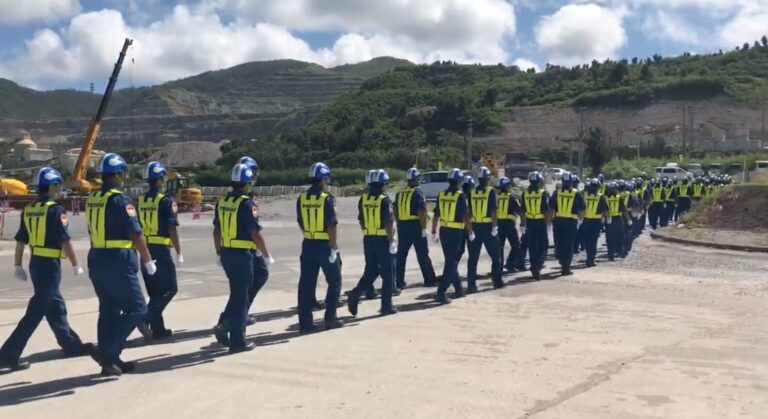
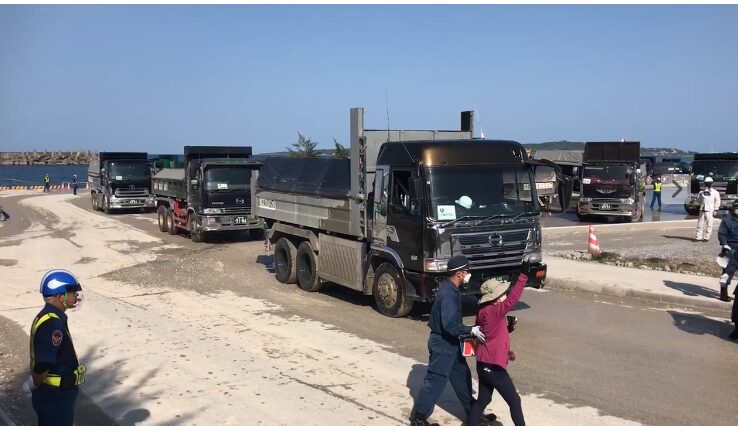
People’s labor and the natural environment were being mobilized on a massive scale to sustain and expand the military bases. Even the soil from the southern part of Okinawa Island, where the remains of those who died in the Battle of Okinawa still lie buried, was being commodified as landfill material for Henoko. I was shockeof reproduction?d by how closely your analysis corresponded to what was unfolding in Okinawa at that time.
A few years later, in 2021, I visited Chikako Yamashiro’s exhibition Reframing at the Tokyo Photographic Art Museum. The video installation there also seemed to reveal something fundamental about labor in Okinawa—namely, that militarization and military enclosure depend upon what Marx called “dead labor.” Workers reclaiming the sea and excavating soil continued their work like zombies, while dead workers occasionally reappeared like ghosts at construction sites and in local communities.
Marx famously wrote in Capital (Volume 1) that “Capital is dead labour, that, vampire-like, only lives by sucking living labour, and lives the more, the more labour it sucks.” Watching Yamashiro’s work, I felt that this was no longer merely a metaphor but an apt description of contemporary Okinawa.
The military bases that continue to expand across Okinawa destroy ecosystems through their construction, maintenance, and military exercises. They form the infrastructure of a politics of death, serving as launching points for wars overseas, producing death abroad while also reproducing soldiers who later experience trauma and, in some cases, die by suicide. Moreover, the labor of police officers, riot police, Japan Coast Guard personnel, and private security guards who suppress protests against the bases also contributes to maintaining the U.S. military base system that perpetuates death across the world. It made me realize that we need to ask how our own labor may be implicated in this global reproduction of death.
Could you speak about the significance of understanding Okinawa through the concept of reproduction?
Matsumura: Immediately upon taking control of Okinawa after Japan’s surrender in World War Two, the US government took two major actions: they secured land and water resources with no regard for inhabitants in order to transform Okinawa into a military colony, reestablishing a legal structure that would require the reinstatement of capitalist relations of production, namely private property and wage relations. While many scholars focus on the former and the consequences that colonization, dispossession, and racialized sexual and other forms of military violence had upon the local population, less attention has been paid to the latter process in North American academia. However, the two were inextricably linked because it was important for the US government to make it appear that the US military presence was the path through which the Okinawan people could attain levels of development and democracy that exceeded their experiences in the prewar and wartime eras. The establishment of mechanisms of legal recourse, land certificates, labor unions, elections, and other liberal institutions functioned to make it seem as though military-related violence were aberrations to an otherwise smoothly functioning democratic system (of course the people knew that this was not true). Focusing on the impossible condition that communities faced under this system to reproduce their livelihoods on their own terms because imperialist reproduction required the continuous extraction of imperial rents backed by the US’s ever-expanding warmaking capabilities allows us to situate the islands within a global structure of US-led imperialism without sacrificing our appreciation for the specific battles that communities waged on the ground to secure what US occupation had made impossible.
Rather than bypassing the dialectical unfolding of the process of the US government’s wholesale transformation of Okinawa as a military colony including the antagonistic relationships that eventually made formal occupation too costly to sustain in favor of including the islands in a list of hundreds of places around the world that constitute what Chalmers Johnson famously described as the “empire of bases,” close analysis of the kinds of resistance that unfolded provides us with a better understanding of how we might transform current conditions. An objection that I have to common approaches in Transpacific American studies to treat Okinawa as one of many examples that illuminates a theoretical point about the US empire (frequently without any significant elaboration of their definition of imperialism) is foregoing concrete analysis of changing class relations within Okinawa’s changing position within an imperialist system that itself, ever-transforming, makes it difficult to understand how important political disagreements and debates over tactics and strategy got resolved for better or worse. Instead, we get either a triumphalist story about “Okinawan resistance” or a tragic story of inevitable defeat. Neither version is politically useful.
In order to understand the way that US imperialism transformed social relations in Okinawa through its own policies and with the cooperation of Japanese capital, the Japanese state, and compradors, we have to move beyond a singular focus on military bases and understand policies like extension of food aid, the establishment of a system of waged work, trade liberalization, and the promotion of “development” projects, also as weapons of war. Often, the implementation of these policies in Okinawa were responses to working class solidarity that emerged as people were forced to turn to waged work following dispossession.
I find your work so inspiring because it focuses precisely on the way that people, communities, labor unions, and other organizations came together in Kin, Kisenbaru, and other parts of eastern Okinawa Island to fight against the US military, oil multinationals like Gulf Oil, and Japanese monopolies like Mitsubishi over years in order to protect their land, their oceans, and their lives from being destroyed by an effort that began in the late 1960s in order to stabilize strategic oil reserves in the region. It traces the decisions that people arrived at collectively, including the decision to put their bodies on the line against the military because they believed that risking their own lives was the only way to push back against the forces that sought to destroy their ability to reproduce their communities. We can draw so many concrete lessons from the histories you narrate.
Question from the audience: I’d like to ask a question about recent events. As you know, there was the tragic accident involving a support boat operated by a group opposing the construction of the new U.S. military base at Henoko, in which students on a school excursion lost their lives. Since then, it seems that pressure on education has been increasing from those who support the policies of Japan’s central government. I would like to ask for your thoughts on this situation.
Uehara: I saw the news about the tragic accident this March almost immediately. I was deeply shocked by the deaths of both the students and the boat captain. Those students lost their lives at the very site where a grassroots movement dedicated to protecting life has long been active.
My immediate concern was whether the anti-base movement at Henoko, which has already endured years of public attacks, would be able to withstand the even stronger backlash that was certain to follow—or whether it might ultimately be overwhelmed. There had already been another fatal accident connected to the movement against the construction of the new base at Henoko in 2024. At Awa Pier, where protesters were demonstrating against the transport of landfill soil to Henoko—a scene that also appears in Earth’s Greatest Enemy—a security guard employed by the Okinawa Defense Bureau was struck and killed by a dump truck while directing the vehicle. A female protester was also hit and seriously injured in the same incident. As I had feared, criticism quickly shifted toward the protest movement itself.
If we go further back, we can see the same pattern in 1976. The U.S. military conducted live-fire artillery exercises near the community of Kisenbaru, which straddles Kin Village and Onna Village, firing around one hundred live shells into the mountains every day. When a student from the University of the Ryukyus was injured after entering the impact area in an attempt to stop the exercises, public criticism of the military intensified, albeit only briefly. Before long, however, the police and the Naha Defense Facilities Administration Bureau shifted their attention to what they called the “dangerous protest movement” and intensified their crackdown. They deployed 800, and eventually nearly 1,000, riot police officers to remove protesters. The live-fire exercises resumed and continued for another twenty years. During that period, approximately 44,000 live artillery shells were fired into those mountains.
What I want to emphasize is that we need to examine, historically, how state repression gradually narrowed the space for protest, how the suppression of the movement came to be justified, and how the Japanese government actively built the legal and institutional framework that enabled the U.S. military to conduct its exercises smoothly.
At the same time, we also need to learn from the language that people created to resist this system. In The Fire of Kisenbaru (1978), Pastor Osamu Taira wrote the following about the people who risked their lives by entering the impact area to stop the live-fire exercises:
Here are seven human beings. They placed their bodies in the impact zone of the U.S. military’s live-fire exercises at Kisenbaru. “Stop killing one another. Stop even preparing to kill one another.” They made this appeal literally at the risk of their lives. Nothing could possibly refute the truth of what they were saying. Yet they have been arrested and put on trial under the petty provisions of the Special Criminal Law… If this trial marks the entrance to a dark age in which one must visit prisons to meet righteous people, then these seven must prevail—not only morally, but in reality. It is not the system of the Special Criminal Law that must triumph, but these seven people.6
I believe that we must foster public support for those who risk their lives to resist militarization, rather than legitimizing the system of militarization itself.
Matsumura: There is a lot of concern right now that the accident will be used to break the bonds of solidarity that have sustained Okinawan-led protests against the US military presence for the last 80 or so years. In fact, the subsequent attacks on the high school that organized the school trip, on Henoko’s protestors, and on Okinawans’ ability to critique the US-Japan security relationship, confirm the fears that people had when news of the accident was first reported extensively in the national media. The backlash has been swift and intense and has become a powerful tool that the Takaichi administration has used in order to push its anti-PRC militarist agenda in the form of the “Taiwan contingency” line, and to push forth its longstanding interest in expanding the scope and scale of the Japanese military without any of the troublesome constitutional guardrails.
One Okinawan colleague that I spoke with expressed their dismay that as a result of the demonization of Okinawa’s anti-base protests in general, memories of the over one hundred thousand Okinawan people who lost their lives to war and militarism since the annexation of the kingdom government in 1879 would be completely forgotten. This, as well as the hundreds of recorded instances of Okinawan casualties stemming from the US and Japanese military occupation of the islands in the postwar period, risk epistemic erasure.
Maybe it is worthwhile to state the commonplace observation that repression breeds resistance. As long as there are lives and political projects that communities deem to be worthy of upholding, resistance will continue.
Question from the audience: Listening to your discussion today, I was struck by the idea that universities themselves have become part of what is often called the military-industrial-academic complex. Given your position as a university educator, how do you think we can create forms of resistance from within the university? Organizing collective action seems particularly difficult in Japan today, but if you have any thoughts on what kinds of resistance might still be possible, I would be very interested to hear them.
Uehara: In Japanese universities today, we constantly hear the word “reform”. We are told that unless universities continue to reform themselves, they will not survive. These discussions never seem to end. As a result, I often feel that we are prevented from devoting sufficient time to what should be our primary responsibilities: teaching and research.
For me, what matters most is learning together with the students in my seminar. Yet it has become increasingly difficult to make time even for activities such as seminar retreats or simply sitting down and talking with students. They, too, are incredibly busy—with part-time jobs, extracurricular activities, and the pressures of job hunting. As a result, I sometimes wonder whether universities still have the capacity to nurture critical thinking and meaningful social engagement.
Yet I do not believe this means that resistance is no longer possible. When I look back on my own life, I realize that I was exactly that kind of student. I was busy with part-time work and rarely took the time to think about Okinawa’s history. But everything changed on August 13, 2004, when a U.S. military helicopter crashed onto the campus of Okinawa International University. That incident led me to join the sit-in protests at Henoko. For the first time, what I was learning at university became directly connected to the place where I lived and the historical moment I was living through. My studies and my own life finally came together.
That experience convinced me that everyone has the capacity to change. Earlier, Wendy, you spoke about the importance of refusing to forget—of taking on the responsibility of reminding others. I think about this every day. How can we create those moments that become turning points in someone’s life? How can we create opportunities for people to see the world differently?
Matsumura: I don’t work in the Japanese university system, so it is hard for me to talk about effective forms of resistance here. The US university is a stifling place. In addition to concrete surveillance of our teaching and all activities that take place on campus, administrations have been working overtime to devise strategies to break the bonds of trust between faculty and students that is actually indispensable for learning. What I can do is to continue to learn from, and share the knowledge that Okinawan protestors, activists, intellectuals, and others have taught me. There is an almost overwhelming amount of Okinawan resistance literature publicly available, especially in the postwar period. Okinawan scholars have worked tirelessly to compile and annotate official documents of their oppressors in countless edited volumes of primary documents. And many trusted colleagues, including you, offer sharp analyses about the ways that Okinawan people fought back against the institutions and entities that constantly threaten to obliterate their livelihoods.
For example, your recent article, “The Kin Bay and Kisenbaru Struggles in Okinawa during the 1970s” in Social Theory and Dynamics demonstrates how protestors pivoted in the course of the Kisenbaru Struggle, which had the concrete goal of stopping the live-fire training exercises that the US Marines were conducting over a major highway in central Okinawa Island. Protestors engaged in direct action by entering the live-fire range and landing site, putting their bodies on the line to stop the training exercises. You note that this kind of direct action became difficult, especially for government employees after the state invoked the Special Criminal Law to prosecute those who were arrested. You trace how protestors who had security in their positions due to their employment conditions or protection from their union continued to engage in direct action even at the risk of being tried under this draconian law, while those who could not afford the risk turned to legal support work and other crucial tasks to support those engaged in direct confrontation with the military and police forces. The piece offered valuable insights into what these protestors managed to accomplish because they had a clear, shared strategy and political horizon. This is an important lesson that carries inside and outside the classroom.
*
Kozue Uehara is faculty at the Tokyu University of Foreign Studies.
Wendy Matsumura teaches and researches on Japanese imperialism and Okinawan history.