Check out our paideia section - Winner of the CELJ 2024 Best Digital Feature Award
episteme issue 12: Seven scholars reflect on feminism, East Asia, and teaching, connecting personal journeys with classroom practices of care, solidarity, and resistance amid war, repression, and institutional crisis.
episteme
issue 12: A Roundtable: Re-Envisioning Feminism, East Asia, and Pedagogy in a Troubled Time
october 2026
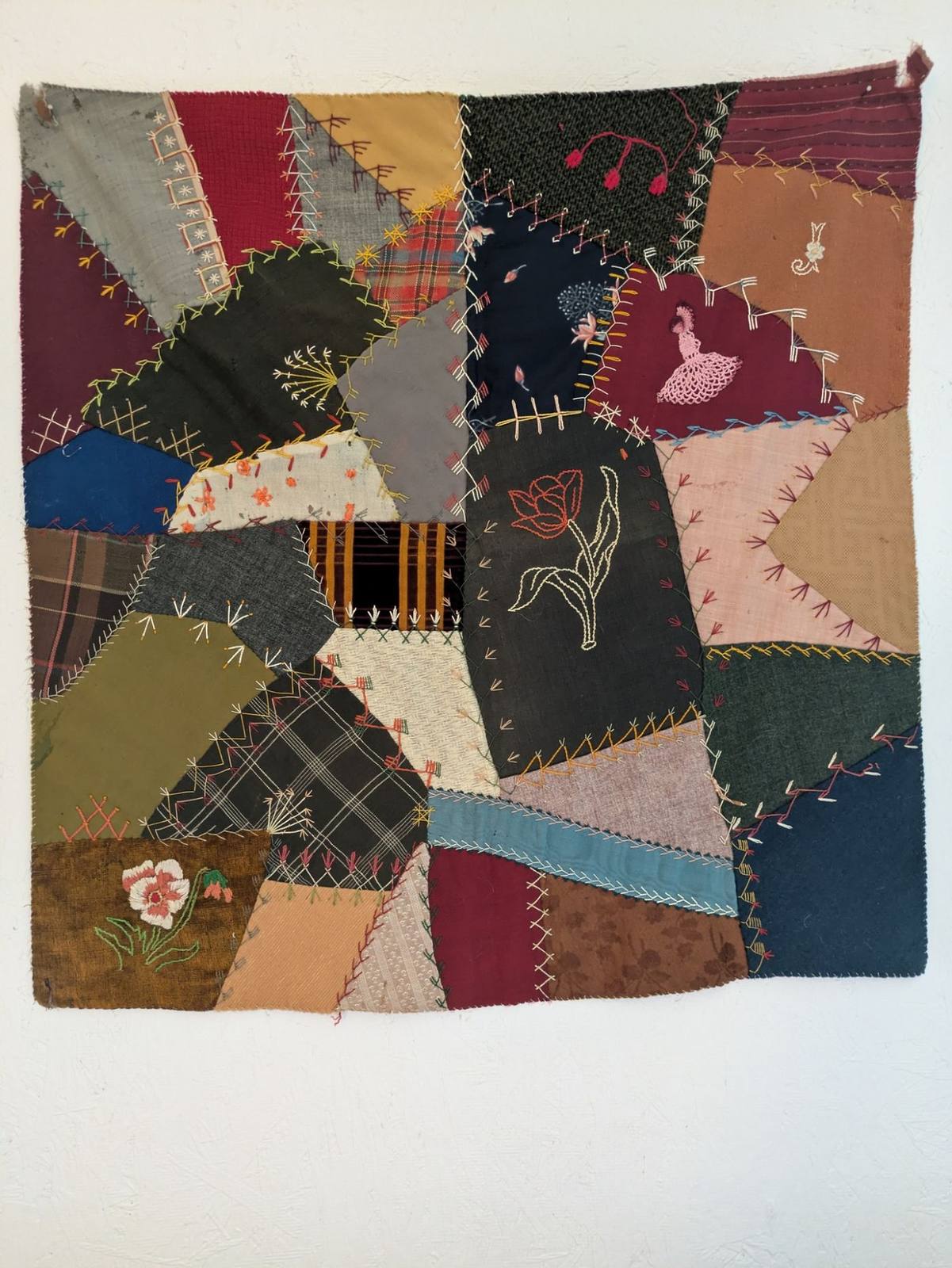
Quilt by an unknown creator (personal collection)
editor's note
episteme Issue 12 features collective reflections on teaching feminism and Asia at the present moment. The impulse behind this project was to assemble practical strategies and notes from our classrooms in a time when the institutional and intellectual conditions for our work are under siege. Asian feminist pedagogies are not defined by established methods or by historical practices attributed to subjects identified as Asian and/or feminist. Rather, they function as a provocative conceptual constellation that encourages critical reflection on the teaching of gender and sexuality as shaped by—but not reducible to—the contexts, voices, and feminist genealogies associated with Asia.
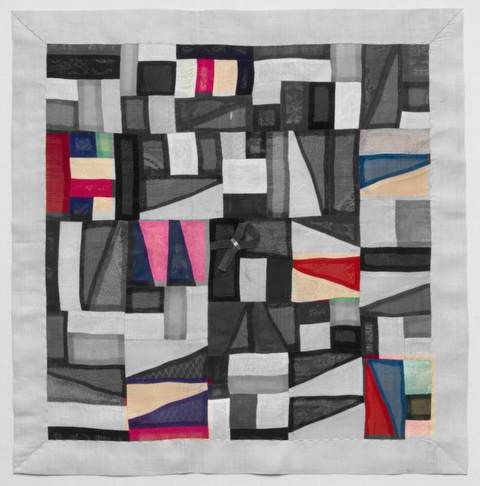
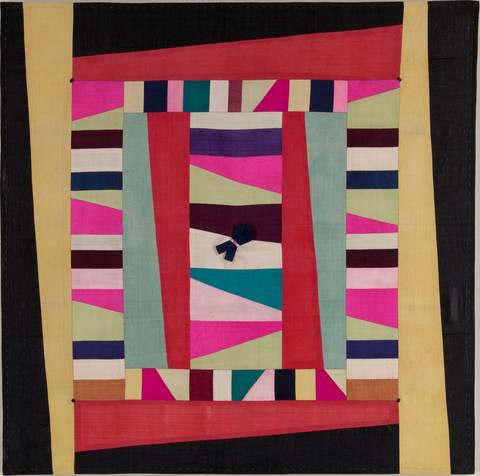
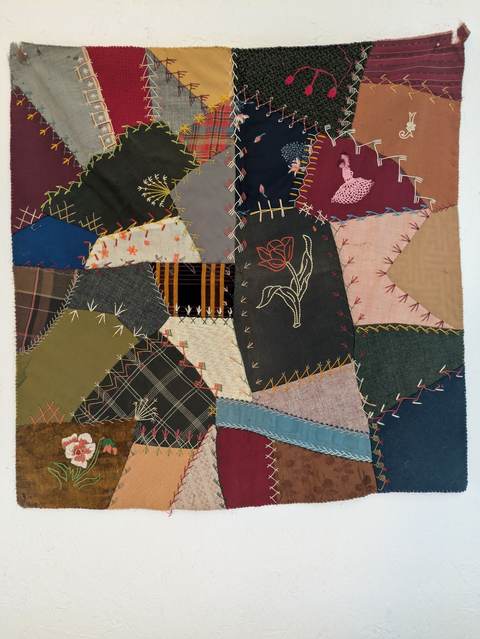
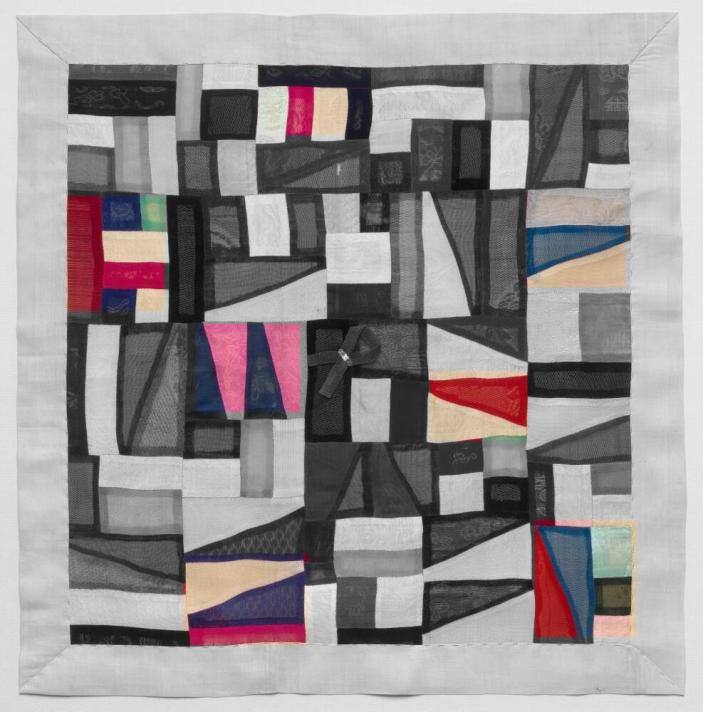
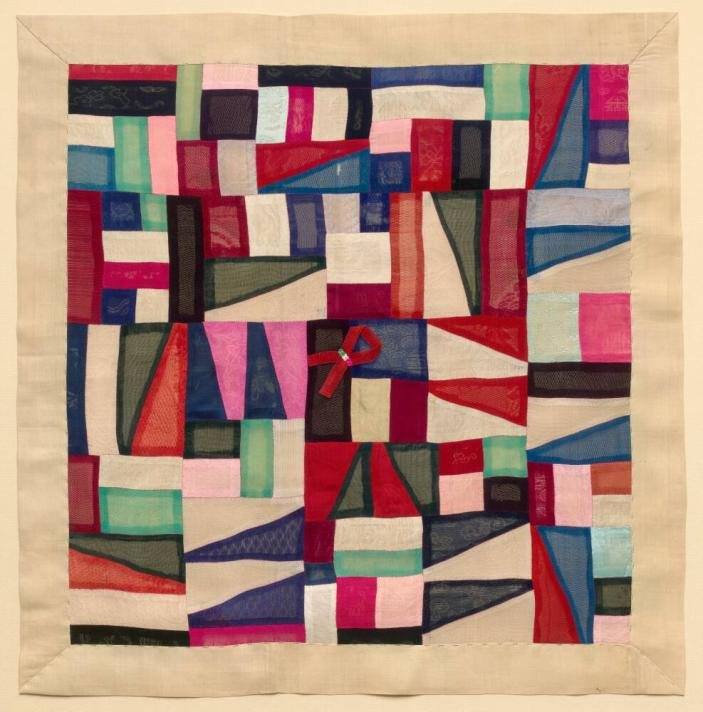
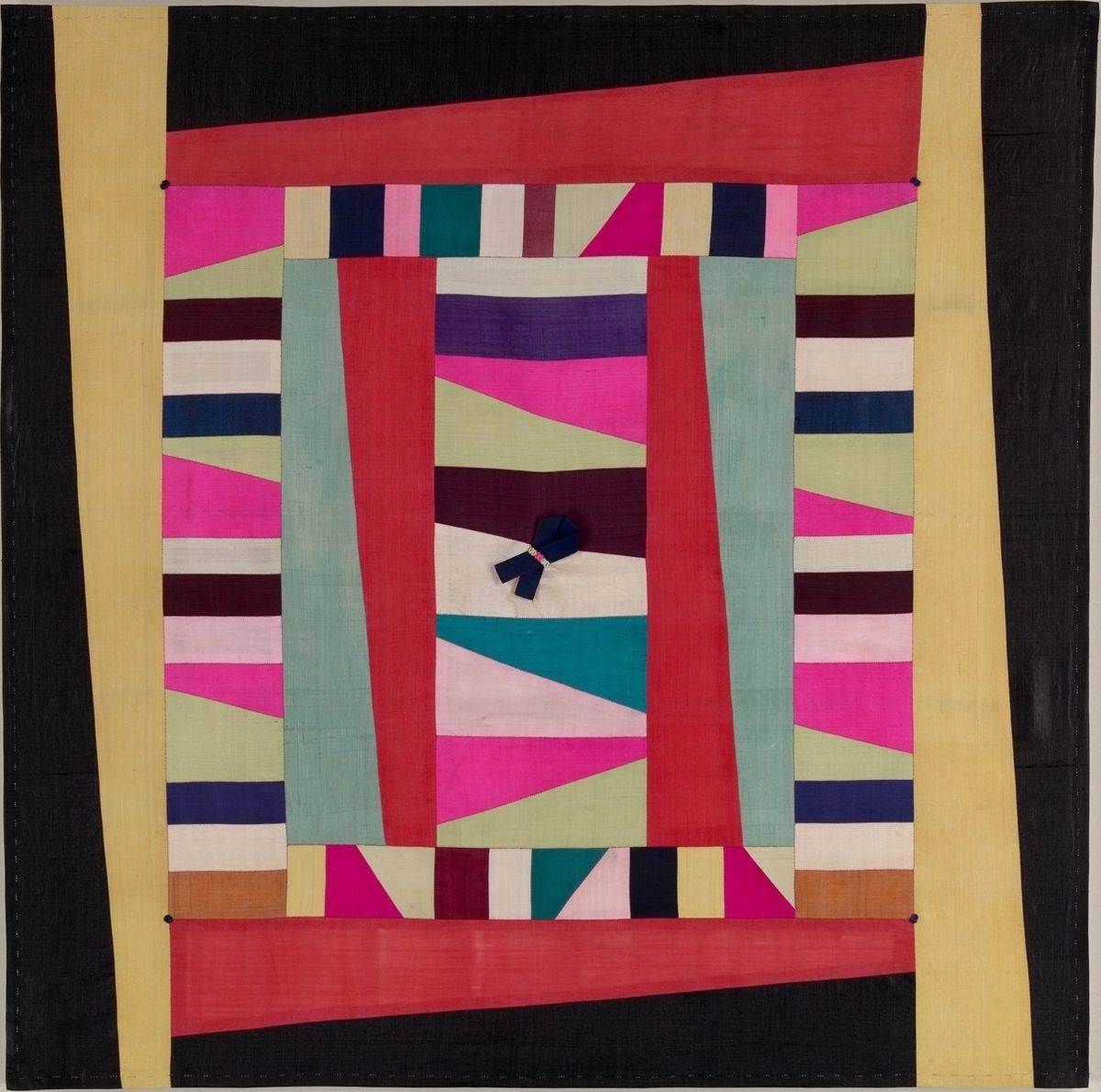
Reflecting on the multiple histories of the present moment and how we got here–personally and collectively, and politically and academically–, the roundtable is organized into five sections, “Bio,” “Beginnings,” “Formation,” “The Present Conjuncture” and “Horizons.” The “Bio” layout is to visualize the democratic and collaborative nature of this roundtable acknowledging all participants’ contributions to the discussion. The patchwork quilts and art designs we chose to accompany each section are to show the multiplicity and collectivity of our voices simultaneously. Like the Asheley’s Sack that was accidentally found in a Tennessee flea market, the patchwork with a rose was from a night market in China and made its journey to a house in Athens, OH. The “Bojagi” piece that is now housed at the Museum of Fine Arts, Houston, was sewn by an anonymous (female) Korean creator dated a century ago. With the specific history of each piece remains unknown, we acknowledge that these handicrafts are a product of women’s invisible and creative labor, first made for functional use and later found a place in an art museum, a history book, and someone else’s kitchen.
The participants are from different disciplinary backgrounds (history, Asian American Studies, film and media, literature, and critical Asian Studies) and at various career stages. The personal and academic journeys that each participant shared turned out to be a rich resource for us to ponder on what teaching Asia and feminism means and what different/shared challenges that each and every one of us has grappled with in and outside the classroom. Admittedly, we ended with more questions than answers, but we are glad to have come to these questions. We hope to continue the discussion, now with readers of this issue, and make it an even more unexpectedly productive dialogue.
Co-editors: Jeongmin Kim with Junliang Huang, Sujin Lee, and Junko Yamazaki
Bio
Each participant introduces themselves in a storytelling style bio with a focus on their personal and academic journeys to feminist pedagogies and East Asia.
Beginnings
gathers memories of encounters with East Asia and politics, where the violence of war and empire surfaces through family anecdotes. Beginnings take shape as these stories resonate.
Formation
reflects on intellectual and feminist formation, tracing how theories, institutions, and lived experience shaped and unsettled the languages through which we came to understand our fields, gender, and power.
The Present Conjuncture
turns to the present, asking how violence, feminism, and pedagogy can push beyond national and disciplinary boundaries and open spaces for thinking and teaching otherwise.
Horizons
In this final section, participants share their visions for engagement with gender, feminism, and sexuality as a political praxis, pushing and reimagining academic boundaries.
Bio
Patchwork Bojagi (Wrapping Cloth), unknown Korean creator — Museum of Fine Arts, Houston (2018.168). Used with permission.
Regarding post-Cold War archives, I was in the first round of recipients as a PhD candidate of a travel grant ($1,000) from the U. Maryland Prange Collection, and one of my most vivid memories and take-aways from that trip was the generous time and advice I received from Prof. Marlene Mayo of U Maryland. and Prof. Joanne Izbicki, another grant recipient working on orphans in postwar Japan, from Wake Forest U. Although I didn’t have the language or institutional knowledge to name it at the time, as a mid-30s grad student, I did sense a gender disparity in the recognition (or lack thereof) that women professors got for a lot of “hidden” and uncompensated labor and contributions to the field. The U Maryland website shows the trajectory of research topics in the field of modern Japanese history since 1999 which includes many more projects where gender is a central component of the research.
By the time I was applying for jobs in the modern Asia/Japan field in 2000, the market was very favorable (I applied for 37 jobs!) due to the mass retirements of (White) men who had been trained in Japanese studies in the US military (and presumably got at least part of their education funded under the GI bill). I’ll never forget a conversation I had with my predecessor at Cal State Fullerton when I told him I’d be including a section on Japanese feminists in my modern survey class, and he asked “Is there such a thing as feminists in Japan?”! His experience in military intelligence in the 1960s was limited to bars with women dancing etc for his entertainment and he seemed to relish such experiences as signs of his “inside knowledge” of Japanese culture.
Regarding DEI, I came across the hearing in the course of looking up info to protest the closing of the National Archives in San Bruno, CA (I haven’t watched yet, but FYI).
As a person who was born and raised in South Korea, drawn to Japanese history, and trained in the United States, I have had a complex relationship with these two empires without realizing how much my personal interests, or simply my curiosity, had been shaped by broader Cold War history and geopolitics. Both Japan and the US were Janus-faced to me as a Korean college student inculcated with Korean nationalism and Cold War ideology in the early 2000s. In particular, while I was more or less naturally exposed to anti-Japanese sentiments because of the unresolved history of Japan’s colonialism, I also took for granted the idea that Japan served as a model for South Korea because of its “successful” modernization, “advanced” capitalist economy, and “orderly” national character. When it came to the US, although I naively believed that it was the most “advanced” country in terms of its political, economic, military, and cultural power, I also felt a certain unease about this kind of American-worshipping mindset after learning about the continued crimes committed by US servicemen against Korean nationals, e.g., the most well-known examples for my generation were the murder of Yun Geum-i (1994) and the deaths of two Korean schoolgirls (2002). Little did I know at the time that my contradictory views of both countries had been shaped by Korea’s semi-colonial position within the Cold War system, “South Korean” nationalism intertwined with anti-communism and capitalism, and, more subtly but just as importantly, a system of knowledge production that normalized modernization theory, notably that of Talcott Parsons.
Having completed my master's training in Korea, where I studied postcolonial theory, inter-Asian approaches (developed through increasing collaborations among scholars in Japan/Okinawa, South Korea, Taiwan, and Hong Kong during the 2000s) and gender theory, I gained a clearer understanding of Korea’s own complicity in US-led Cold War policies in Asia and their lasting impact on gendered populations, such as camptown sex workers, even in the post-Cold War period. However, it took me longer to understand the broader system of knowledge production under Cold War geopolitics, especially the production of academic disciplines, scholars, research subjects, and funding structures, as exemplified by Area Studies in the United States. Interestingly, this realization came during my PhD training at Cornell, mainly through scholars in critical Japanese studies and history and their transnational networks. I am indebted to those scholars, including my advisor, Naoki Sakai, for their insights and for inspiring forms of intellectual resistance through critiques of colonialism, racism, and sexism.
My skepticism toward social systems and institutional apparatuses is largely inherited from my family history. My great-grandfather, a laborer who moved from Fujian, China to Southeast Asia, decided to return to his home country and join the movement to overthrow the last emperor of the Qing dynasty. He survived the revolution and later became a high-ranking provincial official in Fujian. Ironically, it was not the revolution that claimed his life. He was literally stabbed in the back by a fellow revolutionary from his hometown and died while my grandfather was still very young. My grandfather later became a history teacher at a renowned middle school, and my father, an engineer, grew up hearing one lesson above all: stay away from politics. That simple phrase became our family's strategy for survival. It carried them through the political campaigns of the 1950s, the Great Famine of the early 1960s, and the Cultural Revolution.
Only much later did I realize that hidden beneath our family motto of "staying away from politics" was something deeper: a profound distrust of state ideology, social hierarchy, and power itself. I grew up in an environment where every political era seemed to define itself through a different "Other"—the Qing dynasty, the Kuomintang, the Soviet Union, America, or Japan. Perhaps because the identity of the "Other" kept changing, I gradually came to distrust not only particular ideologies but also the machinery that produces them. Yet for many years, that skepticism remained intuitive rather than articulate. I had inherited a disposition, but not the vocabulary to understand it.
I began to acquire that language through nearly ten years of academic training in the United States, a period that also included a year of living in Japan. Earlier fragments of my life gradually resurfaced and became things I could finally articulate: the exhibitionists I repeatedly encountered in public beginning in 4th grade; internship recommendations that consistently went to male classmates in college; my grandmother saving the best snacks for my brothers while we girls were expected to clear the table and wash the dishes. Other experiences also came into focus: strangers in the American Midwest asking, "Are you going back to your country?"; the irony of being viewed as a potential "spy" for a government whose national ID card I do not even possess, leaving me simultaneously inside and outside competing political systems; and my growing understanding of how colonialism, war, and their afterlives shape not only history but also the everyday forms of violence we inherit and reproduce. And then, after my twins were born, I finally understood what someone once told me: "Junliang, this is an anti-mothering world."
The language I learned in North American academia opened an entirely new world for me, for which I am eternally grateful to my mentors and peers. Yet it is not sufficient to account for all the worlds I inhabit. I have come to realize that each of us must create our own language.
My own entry into what I will provisionally call the post-Cold War condition was filtered through Japan's own temporal regime of sengo (postwar), specifically the commemorative discourse surrounding the fiftieth anniversary of the end of the Asia-Pacific War in 1995. As a junior high school student, I encountered that moment not as an object of critique but as an invitation to investigate war crimes.
That summer, entirely on my own and without guidance from teachers or family, I immersed myself in researching the major imperial war crimes that had been unearthed and were still being publicly debated in the early 1990s. I had little idea how historical research was supposed to be done. After discovering that I was too young to use the National Diet Library, I spent days in a large public library in Tokyo, surrounded by adults, photocopying old newspaper articles and piecing together whatever I could find. I no longer remember what argument—if any—my essays made. They were probably little more than accumulations of eclectic findings, organized through a naïve humanist conviction that uncovering historical truth could itself be politically meaningful. In retrospect, the questions that drew me in were already being shaped by transformations extending well beyond Japan. The renewed attention to wartime sexual violence, for example, cannot be separated from the broader historical conjuncture of the early 1990s: the Gulf War, the wars in the former Yugoslavia, the international recognition of systematic sexual violence as an instrument of war, and the emergence of crimes against humanity as a new legal and political vocabulary. My own political consciousness thus emerged through Japan's discourse of sengo, even as the direction of my inquiry had already been conditioned by transnational developments that exceeded it.
America occupied a different place in this story. I attended a Methodist school founded by American missionaries, although, like most of my classmates, I was not Christian by any meaningful definition. "America" remained a vague cultural presence, associated less with a particular country than with the liberal arts and intellectual possibility. More formative, however, were the stories told by my mother, my aunt, and women of their generation who left their hometowns. Instead, they recounted the ordinary realities of their own lives: unequal educational opportunities, expectations of care work, dismissive male supervisors, and the compromises demanded of highly capable women from modest backgrounds. I grew up in central Tokyo, but it was never quite experienced as a place of rootedness; it was simply where my parents had ended up after leaving their respective hometowns. Looking back, I suspect it was these stories, not about America or any particular destination, that quietly shaped my attachment to elsewhere. Before it became a geographical horizon (if ever), it was already bound up with questions of gender, opportunity, and the uneven conditions under which people imagine another life.
My intellectual and professional endeavors are traceable back to my family’s history in continuous Indochinese wars. Under the French colonial oppression in southern Vietnam, my paternal grandparents were forced to leave their homeland to evacuate to Cambodia. They supported the Vietnamese anticolonial revolution in the First Indochinese War; and although later they managed to return to their homeland after the French was defeated, they witnessed their son, my father, once and again go into the Second and Third Indochinese Wars. Born in the Khmer land during refuge, given a Khmer name and sent to Khmer schools, my father accumulated Khmer cultural and linguistic literacy that made him a useful soldier for the Vietnamese revolutionaries to sustain their political dominance over the Cambodian and Laotian populations during and after the Vietnam War. On the other side of the Vietnamese struggle, my mother’s family was peasants managing to survive famine, poverty, and fatal violence from various parties of the wars: the French, the Japanese, the South Vietnamese government, the National Liberation Front, and the American. This history, as I am now narrating in a more historically-aware language, had been elusive to me for most of my adult life because the lack of academic resources and historical perspectives did not allow me to even recognize how our individual lives were situated and layered in such intricacies of the Southeast and Transpacific relations.
As the very first generation in my immediate family to be born and raised in peacetime Vietnam, I was familiarized with the opposition between the Vietnamese nationalist and the America-centered discourses which both valorize themselves and demonize the others in their own ways. My academic interest in the triangulated relation between America, Japan, and Vietnam in the circuitous genealogies of empire derived from my personal curiosity about what is erased and/or made illegible in order for the state-sanctioned narratives to establish their hegemony and competition in the postcolonial/postwar Transpacific. My PhD training and personal connections in America allowed me to realize how the Cold War dynamic, which helped explain the hierarchical entanglements between empires before, during, and after the Vietnam War, also functioned as an ideological and political filter that assimilated the Vietnamese and Japanese experiences (domestic and diasporic) into the selective intelligibility structures of nation and empire. During this process, as much as I learned to recognize my existence of color in the multicultural, multiracial settler land of America, I also realized my own social location as an ethnic majority in the victorious socialist Vietnam as well as my ambivalent identity as an ethnic Asian other in the postwar “pacifist” Japan. My political consciousness emerged between and across these spaces as I reckoned with the layered historical implications that individuals, such as myself, assumed in relation to my own history and that of others. Just as I recognized my parents’ precarious chance of survival at the intersection between (anti)colonial, (anti)imperial violence and their historical agency as Vietnamese settler subjects, I felt the necessity to situate myself and my research inquiry at the cruces of gendered, racial, and settler colonial relations in Vietnam, Japan, and America that were informed by but irreducible to the grammar and vocabulary of (post)Cold War geopolitics.
Growing up the daughter of hippies in Rhode Island in the 1970s, I was unaware of U.S. Imperial Power. Granted, the kids at school who had the nicest clothes all had dads who worked at a nuclear submarine plant called “Electric Boat” in nearby Groton, Connecticut. But we did not see the Cold War as a clash between two empires. We were taught to see it as a clash between democracy and authoritarianism, with “democracy” understood to mean “capitalism” in a straightforward, obvious way. No one in my family had Japan on their radar. Then one day my mother, who had gotten tired of not having health insurance or heat, got a job and bought a Datsun B210. My father angrily declared it was not fit for “normal-sized” Americans. He also said the reason the “Japs” were doing so well economically was that they didn’t have to waste their money on a military thanks to the US. It was partially to spite him that I decided to study Japanese at Amherst College, his alma mater.
I remember being fascinated by the look of the written language and frustrated to find that fascination and aptitude are two different things. I remember being thrilled that my Japanese teacher, Ōtake Sensei, often confused me with another tall white girl who, unlike me, was rich and confident. I remember learning about Empire only after arriving in Kyoto for junior year. My host father learned English as a junior high school student during the Occupation so he could hail customers and keep his family business afloat. Years later he would tell me this business was a brothel. These kinds of power relations were not covered in the one Japanese history class I had taken, on Japan’s “economic miracle.” Our program director was fluent in Japanese. How was this possible when he had grown up in Taiwan? At Amherst, our classes had never mentioned Empire or Kōminka assimilation policies. Of the formative trajectories described in this round-table, mine feel like Exhibit A for the “apolitical,” Orientalist approach to Japanese Studies that was still alive and well in liberal arts colleges in the US in the 1980s. We were obsessed with becoming fluent, and told that until that happened we shouldn’t ask theoretical or structural questions.
This was not the case in English, so I became an English major. I was lucky to have a class with Eve Sedgewick as she was developing the ideas that would become Epistemology of the Closet. I was lucky to read Audre Lorde, Toni Morrison, and Alice Walker with my classmates. I was lucky to have an advisor who encouraged me to perform a feminist critique of Kawabata Yasunari in translation for my senior thesis. In graduate school and as an assistant professor as well, it was the feminists who made me feel intellectually alive and recognized. Intense mentoring by women who took me seriously has always been what shaped my trajectory. That’s why I was thrilled when the leaders of this group convened Gender and Japanese Studies. Now that I am a full professor and my two daughters are launched (almost!) I hope I can make young feminists in Japanese Studies feel seen and supported.
My mom grew up in Taiwan, my dad is from Hong Kong by way of Toishan, Guangdong, and I grew up in a Mandarin-speaking household in California, bearing a Cantonese last name and identifying as Chinese American. I wasn’t exposed to any Chinese literature outside of the Chinese school that I was forced to go to every Sunday throughout childhood. In high school, my “world” history class barely included anything about Chinese history, so as an English major at Berkeley, I was excited to take an art history class on early pre-modern Chinese art, and also a class on Asian American history. But I felt such a huge distance between me and these elective topics, and many years later, beginning my PhD program as a comparatist, I started graduate school fully intending to keep working on French and British contemporary literature, research areas that I felt comfortable and familiar with.
At UCSD, I took a few classes with Yingjin Zhang, who would later become my advisor, and after taking several seminars in the modern Chinese history program with Paul Pickowicz and Joe Esherick, I became motivated to learn more about the history of modern Chinese literature and film. I’m very grateful to have had excellent mentors who modelled the possibility of highly productive, interdisciplinary collaboration between history and literature.
Beginnings
Postal cover from French Indo-China, first half of the 20th century — CC via Wikimedia Commons.
Foreword
This project began with a shared sense that the role of teaching was increasingly under threat amid multiple wars and genocides, political repression, attacks on DEI, and the expanding coercive and violent machinery of immigration enforcement. Our initial impulse was almost to assemble an emergency kit, drawing together practical strategies, notes from our classrooms, observations, and whatever else might help us continue our work as its institutional and intellectual conditions were being eroded. Yet as we tried to understand what was coming into view, the possibilities it foreclosed, and what was disappearing, we also found ourselves looking backward and inward. A survey we ran, and the threads organizers picked out from it, surfaced other temporalities that did not fit neatly within the register of crisis or immediacy. Before our remote roundtable, we each wrote briefly about our own “before,” asking, in the simplest terms, how we had come to be where we are. These pieces were never intended as comprehensive life histories or exercises in autobiographical self-disclosure. Their incompleteness allowed elements of these accounts to resonate more freely with one another, forming connections that no single account could have anticipated.
These accounts reached further back than we had anticipated, touching on childhood and young adulthood, often before college or the acquisition of a recognizable political vocabulary. They brought into view family members known only through fragmentary stories whose significance remained obscure at the time, even as their affective charge oriented us before we could fully understand or name what we were being oriented toward. We initially called these pieces our “befores,” now collected under “Bio” in the publication. I have titled the roundtable’s first section, presented here, “Beginnings,” in the spirit of Edward Said, to name what takes shape when these incomplete accounts are brought into relation. Their juxtaposition does not restore a settled past. It creates new relations among its fragments. Our collective return may preserve something of what is disappearing, but it also becomes an intentional departure from what precedes us, opening a future from where we stand.
Foreword — Co-editor, Junko Yamazaki
Filter by voice:
Sujin
Since we already shared the “before” phase with one another (collected under “Bio” in the publication), it will set the tone of today's conversation. We will start with our personal stories or narratives, and then we'll move on to how it is shaped by a broader structure of academic discipline, U.S. neo-imperialism or militarism, the recent development of geopolitical tension, etc. So that's where we will head toward.
Kristine
For me, I didn't know any of your personal background stories, so this was all just so enlightening and interesting, and thank you all for being so detailed and transparent. In my case, I'm definitely a product of area studies of the 1980s, with a major in Japanese language and minor in Asian Studies from Georgetown in 1988, and even my first encounter with Japan in the early 1980s arose in the context of Japan bashing of the early 80s due to the U.S. trade deficit and growing global influence of the Japanese economy. I was able to go to Japan on a youth exchange for two months in the summer in 1983 so Mimi, your story about your host family reminded me of something I didn't know until later about my host father that summer, that his house had been firebombed in Tokyo in 1945, and here he was hosting a student to stay with his family to help his daughters learn English and give them more opportunities at this point in the postwar era. So, in terms of empire and the US role, I'll never forget someone that summer sent me a stamp with the President Truman's face on it, and I thought, oh a letter from my grandma or whatever it was, and my host family saw the picture of Truman, and were like, why would you memorialize someone like him, who authorized the dropping of the atomic bombs? So those kinds of personal anecdotes really more than any academic study, those kinds of personal, domestic encounters really, made me think about the U.S. empire and the power of the U.S. military, that kind of thing.
Mimi
I also really enjoyed reading everybody's biographies, and I was shocked by how little I knew about my friends from the Gender and Criticism Workshop with whom I've been meeting all this time! I had no idea that Junko was a PhD-level researcher as a junior high school student. It’s so impressive, but not surprising, that at age 14 you were already questioning the logic of “post-war.” And Junliang! I had no idea your great-grandfather returned to China from Southeast Asia to join the movement to overthrow the last emperor of the Qing dynasty, only to be killed later by a fellow-revolutionary. I love that your grandfather, his son, became a history teacher but cautioned everyone to “avoid politics.” Wow. I guess you failed! Suong’s family history too is such an incredible snapshot of brutal reversals of power in 20th century Southeast Asia. I had no idea your father fled French colonial oppression from Vietnam to Cambodia, then later had his Khmer fluency tapped by Vietnamese revolutionaries to control Cambodia. Sujin’s story was the only one familiar to me, in the sense that I have heard Korean academic friends talk about how bewildering it was to have to emulate Japan and the US without acknowledging their imperial crimes. But like Kristine I think, I feel embarrassed that the default position for me as a white American was oblivion to all this, and that I never talked about it with Sujin herself. Our positionalities in Japanese Studies, and our awareness of empire and power and whiteness and anti-blackness and anti-Asianness are just so overdetermined by our personal histories. I often think of Gayatri Spivak’s critique of old-school Asian Studies, which claims to have “no politics” (Spivak 2003). It’s a privilege to be in this group because the “before/bio” stories reveal the overwhelming politicality of such a claim.
Angie
In my bio, I mentioned the disconnect I felt with my Chinese background, from my teenage and college years to later in graduate school during coursework, and reading everyone else’s bios made me think back to several puzzling moments in childhood with my family. Those distinct memories stirred up references I couldn’t place, but also could not forget, since they offended me on some level I could not pinpoint at the time. For instance, it was not until grad school when I thought more carefully about why my mom always insisted that Cantonese was a horrible language and this was through conversations over the years with graduate school friends from Taiwan, mainland China and Hong Kong, and thinking about intergenerational trauma. My maternal grandparents fled to Taiwan in 1949 with the KMT, and as a child I was constantly told stories about the violent atrocities that the Japanese committed against Chinese civilians during the second Anti-Japanese War. I was shocked and offended that my grandfather openly ranted against Japanese people in particular, since this ran counter to my very American pro-multiculturalism sensibility. I never heard anything explicit from my family about KMT waishengren vs. benshengren and indigenous Taiwanese in Taiwan relations, or Japanese colonialism in those interactions with my grandparents. Later, when I was older and in college, I remember being really struck with an LA Times newspaper ad that my grandpa had taped on the wall in his house that said “The Diaoyu Islands belong to China.” Seeing that ad up on the wall confused me, since I assumed that he had left mainland China, why would he care about that after living in the U.S. for decades? Another surprising moment for me took place years later at a family gathering for the holidays, when my cousin wore a T-shirt that said “100% Taiwanese.” I didn’t think much of it, just thought it was a cool quirky shirt he had. My mom was so irritated by that T-shirt, she claimed that my cousin was not Taiwanese at all, that the label “Taiwanese” could not be used to refer to waishengren, so he was basically being misleading and wasn’t qualified to wear that shirt. I was confused about why she was overreacting and being unreasonable. In grad school when I finally learned about colonial history, and through long conversations with friends from mainland China, Hong Kong and Taiwan, I could only begin to imagine my mom’s childhood, for someone born in Taiwan in 1953, how that complicated process of cultural identity formation would even look like, and what a contentious role
language would play in the process that eventually led her and her family to
California in the 1970s.
Junko
I think it was Suong who used the term peacetime in her reflection, describing her generation as the first to basically grow up in peacetime. Yet reading everyone's responses, I was struck by how persistently war remained in the background of our stories. Almost everyone’s account seemed to carry some shadow of war, whether from ongoing conflicts, past wars, family memories, or violence unfolding elsewhere. Angie's account of her childhood also painfully echoes this shadow, incurred, or experienced, as small but repeated, aggressive spurts of violence that felt out of place, out of time, coming out of nowhere. I found that really fascinating. Another thing that stood out to me was family background. Everyone's relationship to politics growing up looked different. Some of you had grandparents, parents, or relatives active in political movements, others grew up pretty removed from it. What I found interesting, though, was that even when politics wasn't explicit, these accounts kept returning to small scenes or moments that, in retrospect, seemed to shape our political sensibilities. I don’t know how often you think about those moments, but writing these reflections seemed to draw out memories and feelings that might not otherwise have surfaced, or at least not in quite the same way. I didn’t grow up in a particularly political family, so, like some of you, it was really in college, and then graduate school, that I acquired a political and critical vocabulary. But a bit like what Kristine said, when I wrote my own “before/bio,” what came back to me about 1995, the so-called "sengo 50-nen," marking fifty years of Japan’s “postwar,” was in many ways different from the understanding of postwar Japan I had spent years learning to unlearn through academic training. These thoughts were certainly not untouched by that unlearning, but neither could they simply be folded into it.
Writing this also made me realize how many things I had never really thought through until I tried to explain my own intellectual and personal background to someone else. It became a really reflexive exercise. Reading your responses had the same effect.
Junliang
I was also very impressed by the fact that Junko was doing research, or trying to do research, at the National Diet Library, but wasn’t able to as a junior high school student. I wasn't aware of the age limit until recently when I was trying to bring my kids to the Library with me. When I checked their policy, it said nobody under 16 years old could enter. So I was very impressed by that. And I had such a great time reading everyone's life stories. I was also curious about Mimi's host family father's business. Kristine also mentioned the house of her host family in Japan. I was just wondering if these fathers ever discussed anything about the war with the homestay students. Because when I think back to my grandfather, I don’t remember him ever talking about his father when he was alive. Everything I know about my great-grandfather came through my father. My grandfather never talked directly about any of those things to us — his grandchildren, my generation. So I was wondering whether the fathers in those host families ever openly discussed any of those issues with you guys.
Mimi
The biggest way my homestay father taught me about the war, or really the immediate post-war, was through the way he spoke English. I only understood this later, after I had been in graduate school for some time. And by then we spoke only Japanese. But he told me when he was drinking one night, I must have been in my late 20s, that he needed English as a teen in the late 1940s to get customers for his mother’s business, which was a brothel. That’s when I remembered the solicitous and gentle way he had spoken to me when I first arrived in the fall of 1987 as a 19-year old. I realized, “Oh, he must have used this same English to speak with American GIs.” I already knew that most of his male family members had died in the war, including his father. When he told me about the brothel he explained that the remaining family members’ livelihoods all depended on it. So suddenly the power relations became clear. He didn’t talk about what any of the men had done as soldiers in the war. He didn’t talk about Japanese war atrocities. But it was clear that many of the women in his family had no choice but to deal in a direct, bodily way with American empire during the Occupation.
Junliang
That’s interesting. I was also thinking about the meaning of “empire” when I was writing about my own trajectory. Because if you think about it, the meaning of empire actually changed quite dramatically for me as I was growing up. When I was younger, from history textbooks and literature, “empire” could actually be a very positive word. It represented power, prosperity, and influence. Usually we were talking about the Chinese empire in premodern times—the Middle Kingdom, its enormous territory, its influence over neighboring regions, things like that. So there was a certain sense of pride associated with the idea of empire.
But then when we moved into modern history, suddenly “empire” became something very different. Now we were talking about the Japanese Empire, the Russian Empire, or later the American Empire, and the word was associated much more with invasion, domination, and violence. I remember finding that shift really interesting. How could the same word carry such different meanings depending on which empire we were talking about, or which historical moment we were looking at? So that got me thinking about what “empire” actually means, not only in English, but also in translation, and in the different languages and historical contexts we come from. When we sit around this table and use the word “empire,” are we actually talking about the same thing? I think that was one of the questions that came back to me when I was reading everyone’s stories.
Suong
I resonate with Junliang in terms of the multivalence of the word “empire.” Growing up in post-war Vietnam, as I said in my reflection, I was familiarized with the nationalist discourses on the history and war. The connotation of empire tends to be negative because it almost always means the foreign invaders. Tracing back to the pre-modern history of Vietnam, “empire” is used to talk about the Chinese empire in a negative way (even though in the case it is used to refer to the premodern Vietnamese kingdom, it usually implied a sense of pride about the nation’s independence and self-determination). And when I started looking more closely at what was left outside of that nationalistic discourse of Vietnamese history, I saw that Vietnam also functioned as an empire in the pre-modern time in its rivalries with Siam for the southward expansion over the indigenous land of the Cham and Khmer people, and then in the modern time in its execution of political influence over the neighboring Indochinese countries even during wars with other major empires such as the French, the Japanese, the American. But that part of Vietnamese imperialism in relation to the neighboring countries was written over by historiographies about other bigger empires as invaders, which served the nationalistic discourse of the victorious socialist Vietnam. So I was just thinking of, first, the multiplicity of empires, and also the competition, or the power relations between how certain narratives about certain empires were emphasized while others were erased.
Sujin
What Suong said reminds me that growing up in South Korea, “empire” has always been ambiguous. It primarily referred to the Japanese empire since Korea was the colony of the Japanese empire for over 35 years and that’s the history I learned as a student. The U.S. on the contrary was never an empire to me growing up. The U.S. was always positive culturally, even as the “leader of the globe” for a long time. I think I never saw the U.S. as an imperial or neo-imperialist power until I earned a language to analyze the structure of this imperialism, especially during the Cold War period and afterwards. So I have been very interested in how people see empire in a different way, and what Junliang and Suong just said reminds me of how one’s localized experience allows them to define empire in different ways.
Another thing that struck me is everyone’s individual history, especially how you end up in where you are now as a researcher in Asian Studies. I have known most of you for a few years now, but I didn't know about your history, and to me, it was like reading a short memoir, a very abstract version of each memoir. I was struck by the generational and social layers that shape our own research interest and our identity as a scholar. Junliang and Suong’s responses allowed me to reflect on my own identity formation in relation to my social background. It came only as an afterthought, as I was not equipped with the critical lens to connect geopolitical landscapes with my research interests. Looking back, growing up in South Korea, a country situated between two empires, the former empire of Japan and the neo-imperial US, has shaped my mondai ishiki (critical awareness) of the intimacy between nationalism and imperialism. Whether pro-imperial or anti-imperial, South Korean nationalism has been complicit with imperialism, and, not surprisingly, they share heteronormative and misogynistic norms. It may seem ironic that, as a Korean-born scholar, I ended up becoming a historian of Japan and received my academic training in the US. Yet I may simply be a rebellious product of imperialism, nationalism, and the transpacific Cold War system, one who is keen to question their intersections.
edited by Junko Yamazaki
Gayatri Chakravorty Spivak, Death of a Discipline, Twentieth Anniversary Edition (New York: Columbia University Press, 2023).
See, for example, Naoki Sakai, ed., Rekishii no egakikata 1: Nashonaru hisutorī o manabisuteru [How to Write History 1: Unlearning National History] (Tokyo: University of Tokyo Press, 2006).
Formation
Patchwork wrapping cloth (“jogakbo”), unknown creator — public domain, MET 2007.149.
Filter by voice:
Mimi
I love the subheadings for our discussion today, “Beginnins,” “Formation,” “Present,” “Conjuncture,” and “Horizons.” As we move to “Formation,” I can’t help thinking of this also as “.” I realize this is about how we developed in graduate school as scholars and feminists. It’s also about how our respective institutions helped or didn’t help with what we were trying to do. I look forward to hearing what everyone has to say. When we talk about our formative years as scholars, it’s hard not to qualify them now as the pre-fascism years! At first, I tried answering Question #2 in a kind of pre-fascism mode, like the old me. I'm not really used to having to redefine, having to acknowledge that everything is different now.
At the same time, to the degree that my “formation” is the story of having chosen an ambitious topic – female subjectivity in Tanizaki, Freud, and “the modern subject” – sometimes I console myself with the notion that political collapse shows how formation needs to be ongoing. As a graduate student and assistant professor, I was convinced that if I worked hard, I could prove that female subjectivity is actually impossible within the structures of modern capitalist exchange and value. In that sense, my formation as a scholar reading modern Japanese literature was all about identifying and responding to the conviction that what is absent, unrepresentable, and silenced is sexual difference itself. We talk about multiple genders but, really, it’s all what Luce Irigaray calls “the One.”
I wrote a book I was proud of, This Perversion Called Love, 2009, but almost never do young scholars come up to me at conferences and say, “yes, you really proved it!” On the contrary, as a referee I get sent so many essays and books that take up these issues but don’t cite my work at all. So now that the rise of fascism coincides so obviously with the authoritarian affirmation of the Epstein class – “of course we traffic in young women! That’s what they’re for! What do you mean, ‘female subjectivity?’ That was never a thing!” – I feel like I’m in formation all over again. Like I should just go for it, in the Beyoncé sense. “Take formation!”
Junko
We came up with these subheadings as a way of reckoning with the ongoing crises, some of us feel that we are being undone by them, and of revisiting the assumptions and expectations that shaped our formation as North America-based academics, our intellectual orientations, and, I would add in light of your comment, Mimi, our subjectivities. One point we kept returning to as organizers was that formation is something we understand retrospectively: what we see in it changes with the present from which we look back. There were so many things about how we were socialized, or how we learned to relate to other people and institutions, that we did not quite recognize at the time but that have come into sharper focus now, taking on a different significance and urgency. The impossibility of female subjectivity that you mentioned seems to me one of those insights that bears differently on us from the present. It raises the question of whether this impossibility was there all along, throughout our formation, without necessarily occupying the center of our attention or aligning with where we thought our intellectual efforts were most needed. Your account of seeing your work repeatedly go uncited seems especially striking in this respect.
So, there is this effect of a before and an after. At the same time, this temporal ordering brings something more painful into view. For some of the participants at this roundtable, “formation” in the more straightforward sense of a formative period is still very much ongoing. What some of us have experienced as a rupture, particularly the current political moment and the fascist turn, is, for others, especially younger participants, simply the U.S. academy they have known. So, I do think it is important to register these different historical moments and generational experiences. What I found so exciting about the roundtable was how people speaking from very different generations and points of departure found their memories intersecting in unexpected ways. We did not simply occupy different positions along the same timeline. Our stories kept opening onto one another.
Junliang
That’s right. "Formation" really is that kind of transitional period, but without a promised so-called transcendence to a subjectivity. Initially, I imagined “Beginnings” as everything before college, and "Formation" as entering academia, graduate school, professional training, things like that. But when I actually started writing down my responses, I realized those different moments kept overlapping and could not be clearly separated.
One thing I keep coming back to from graduate school was the experience of encountering all these Western theories for the first time. I remember staying up until two in the morning reading theory because everything felt so new and eye-opening. For the first time, I felt like I had a vocabulary for questions I had been carrying around for years without knowing how to express them. Theory gave me a language that I simply didn't have before, and that was incredibly liberating.
But as I went through graduate school, I also found myself constantly pausing. I had this new language, and it was empowering, but there were still experiences from my own background that I couldn't quite express through it. For example, when I read Raymond Williams’s discussions of revolution, I was struck by how hopeful they felt. Revolution appeared as a long process of democratic transformation in culture, education, and society. But because of my own background, I couldn’t help thinking about my great-grandfather’s story. The revolution I had inherited through family history was also full of violence, betrayal, and disillusionment.
I felt something similar reading postwar Japanese thinkers like Maruyama Masao and Irokawa Daikichi. Irokawa’s minshūshi shifted the focus to minshū, which I found exciting at first. But after a while, I also started feeling that the minshū in his work became a little too idealized. Maybe because it grew out of a very specific local historical context, I wasn't always sure how far that idea of minshū could travel. It did not quite match the people I knew growing up in the so-called Third World, where people’s lives were much more contradictory and complicated.
So, I guess that also belongs to my “Formation.” Looking back, I think what I was really trying to do was to develop a language that could hold these contradictory experiences without flattening them into either right-wing nationalism or left-wing idealization. I wanted to respond to the rise of right-wing ideologies, but at the same time to have meaningful conversations among left-wing scholars across different generations and backgrounds. Not to reject those theories, because they had given me so much, but to ask where they worked, where they didn't, and what they might still leave out.
Sujin
Echoing what Mimi said, I would like to share about the lack I always felt. The question of gender, sexuality, and feminism in Japanese history or East Asian history field where I was trained, was always insufficiently addressed in my view. I had long been interested in women's bodies. My MA thesis in Korea examined the history of Japanese modern midwives, so I analyzed reproduction in modern Japan, but I did not have the analytical lens of gender. In the classes I took and the books I read about Japanese history at the time, I did not see much gender analysis.
I remember attending a British history seminar as an MA student, where I read Judith Butler's Gender Trouble for the first time. It was very complicated and arcane to me, but at the same time it excited me because finally I had some academic tools through which I could analyze the primary sources I had collected. That experience filled the gap in the pedagogy of gender in Japanese and East Asian histories.
During my PhD training in the US, even though I gained a critical understanding of the racialized structure of imperialism and knowledge production, there were only a handful of scholars I could reach out for gender and feminist approaches, despite my research interests centered on the discourse of reproduction in interwar Japan. When I was working to turn my dissertation into a book, I had a wonderful opportunity to talk to Jennifer Robertson, a seasoned, prolific scholar in Japanese anthropology who graciously reviewed my book proposal. She told me that the potential strength of my manuscript was the question of gender in the Japanese empire, but that it was not sufficiently pronounced. It was that moment that I realized gender was still marginalized in my research, let alone in the fields of Japanese and East Asian-related Studies. All the flashbacks came back at the time, reminding me that I might have suffered from this lack of gender perspective in the Japanese history field all those years.
The importance of researching and teaching gender, sexuality, and feminism is, however, not limited to my personal journey. As a researcher and an instructor, I emphasize such lenses to look at Japanese society as well as other East Asian societies to understand different power relations. Joan Scott’s often-cited account of gender in the late 1980s is still valid and crucial: “gender is a primary way of signifying relationships of power” (Scott 1986). This reminds us that a gender approach seeks to illuminate the sites of power, instead of simply salvaging “women” from their marginalized status or narratives. Through the lenses of gender, sexuality, and feminism, both instructors and students can engage with a wide range of powers, from imperialism and colonialism to biomedical knowledge and heteropatriarchal orders. Also, these lenses allow us to see how these power relations often produce a social imaginary of intimacy, care, and romance while vulnerable, marginalized groups remain in silence to maintain such an imaginary.
Mimi
I'm a generation at least ahead of Sujin and Junliang, but Cornell was already a powerhouse in Japanese Studies when I was in graduate school. Chicago too, albeit more in history and anthropology. I wasn’t at Cornell, but my advisors at Princeton admired what was going on there, and so did I. At the same time, I felt the same frustration toward the “mafia” elements, the fraternity elements.
For my generation, these male scholars and their students were revolutionary because they were the first to critique the discipline of East Asian studies and its Cold War politics. To be political at all was necessarily to be on their side and to lap up everything they were saying. On the other hand, even though questions of sexual violence and erasure are integral to Japanese empire, the Fifteen Years War, Pax Americana, and so on, the graduate advisors and advisees at Cornell and Chicago did not talk about them, as Sujin notes. Or, they treated them like secondary questions that would get answered when one took a properly Marxist approach.
Meanwhile, the gender politics of the academic communities themselves were deeply unequal: in who did the care work of making sure students got through programs and got jobs, and in who became a “star.” They were especially unequal in terms of male academics sleeping with, or attempting to sleep with, junior women in the field and not realizing that this was bad for the women’s careers. I remember I went to work with someone who said he was a feminist and then found out after I arrived that the woman he married had been a high school student when they met. He was at least 20 years older. She never finished graduate school.
I’m almost sixty now, so this was a long time ago. But it still seems very much a problem when we have recent events like a 99-page sexual harassment report written about a senior figure in the field, reported in major metropolitan newspapers, and he’s still on the job after a minor slap on the wrist. This is someone who wrote tenure letters for many of us. We asked him because he has a lot of power. But then you go to a conference, and you talk about your feminist book, and he hasn't read it! He has no idea what the argument is.
This is how we have a perpetuation of misogyny and the impossibility of feminism in the field. I think that Cornell got a lot further with politics than any PhD program ever had, but it too had this notorious blind spot about sexual difference, about feminist theory. It points to an impasse in our field. Maybe this could also be an asset now, though. The field itself could never truly identify as anything but Area Studies. Does that make our classrooms, in some ways, off the books? Under-the-radar places to do anti-fascism?
Angie
In the literature department at UCSD, for someone on my eventual path, the divide seemed clear, at least among students and advisees preparing for the job market: either you marketed yourself for an East Asian studies department or for comparative literature. The problem was that comparative literature was seen as being in crisis in the early- to mid-2010s, while the market for Chinese-related positions looked more promising. Most of those jobs, however, were in Chinese language, which posed a major challenge for those of us who were not “native” speakers in a strict sense.
I was a heritage speaker: Mandarin was my first language at home, but I had learned traditional characters from Chinese school teachers who, like my mother’s side of the family, had immigrated to the U.S. from Taiwan in the late 1970s and early 1980s. I was also much more comfortable speaking Mandarin than reading and writing. By the early 2010s, Chinese language programs were increasingly looking for teachers from mainland China, and as a graduate student I was unable to get a job TA’ing or teaching Chinese language. This became a hurdle because I was trying to present my comparatist profile under the guise of a potential Chinese language instructor, even though it was hard to imagine myself ending up in an East Asian studies department without having been formally trained in one.
When I think of how rare it was during my academic training to see gender treated as an explicit issue in scholarship, I remember a funny and awkward moment in grad school. One of my mentors had just published an edited volume and gifted us copies. When he asked for reactions in seminar, I pointed out in a very un-tactful way that one of the chapters seemed like it had just been added in to address the experiences of women (as you can imagine, wordlessness after; no one knew quite how to respond to that). The impression I had speaks to the silence around gender as an explicit research topic—at best it may have appeared implicitly on the margins.
But gender certainly came up in other ways during graduate school. For me, the most memorable encounters with gender were all related to pregnancy and the decision to have kids. I was pregnant with my first child in 2008, during my third year, as I was finishing coursework. Some professors were very supportive, but I also received concern and criticism: that no one in the program had ever had a child during grad school, and that I should not have any more until after tenure, which, from the perspective of a third-year graduate student, seemed impossibly far off. The irony was that around the same time, one of my male classmates, in the same year but not my department, found out his wife was pregnant. Because she was not a graduate student or working, this was not seen as a problem.
That experience made me reluctant to tell anyone when I had another baby in 2012. Since I had moved away by then and was writing my dissertation remotely, I could avoid sharing the news for a while. I felt awkward because of the earlier advice, which had come from a well-intentioned faculty member who was herself a mother. But the news eventually leaked, and I worried that it made me look unreliable as a graduate student and job applicant, and that present or future employment opportunities would be taken away from me. During this second pregnancy, for instance, I repeatedly insisted on my commitment to continue as a research assistant doing editorial work for my advisor, and I was able to convince him of my seriousness.
More broadly, even though I was not trained in gender studies, my experiences in and outside academia made me aware of how pervasive gender bias and inequality are. Looking back, I can see how often I had to deal with perceptions and assumptions based on my name, appearance, marital status, and whether I had kids. Especially as a graduate student, I felt I had to alternately hide or accentuate parts of myself to fit expectations. This may happen in any field or job search, but academia has its own particular forms of pressure.
Suong
Well, I am myself a PhD candidate, so I'm definitely still in the transitional phase. I particularly appreciate what Mimi said about how Japan studies has a hard time defining itself as anything other than area studies. As somebody whose research is essentially comparative and relational, I find it hard to fit into predetermined area studies disciplines. I find myself walking across critical refugee studies, Vietnam studies, Japan studies, diasporic studies, gender studies, and so on.
For a long time, I struggled to bring these subjects together and to transcend the nation-state framework under which national names were assigned to these subjects I was studying. The course I just taught, “The Vietnam War and Popular Culture in the Trans-Pacific Relations,” was one place where I could bring these forces into conversation. Instead of naming the nations, I name the war, or the violence, as the critical site where these various groups or populations come together.
edited by Junliang Huang
See, for example, Luce Irigaray, This Sex Which Is Not One, trans. Catherine Porter and Carolyn Burke (Ithaca, NY: Cornell University Press, 1985).
Margherita Long, This Perversion Called Love: Reading Tanizaki, Feminist Theory, and Freud (Stanford, CA: Stanford University Press, 2009).
Judith Butler, Gender Trouble: Feminism and the Subversion of Identity (New York: Routledge, 1990).
Joan W. Scott. “Gender: A Useful Category of Historical Analysis.” The American Historical Review 91, no. 5 (1986): 1053–75.
The Present Conjuncture
Quilt by an unknown creator, personal collection
Filter by voice:
Suong
In the present conjuncture, when geopolitical conflict is again hardening national and disciplinary boundaries, I wonder if this question of moving across boundaries also speaks to the nature of war and institutionalized violence, whose magnitude, effects, geography, and temporality cannot be neatly defined, if not always layered and interrelational. It is at these sites of violence that we can recognize the intersections not only between regimes of power and opposing forces but also different groups of people designated to the gradated spectrum of humanity. I am particularly interested in the vexed relations between marginalized groups subjected to uneven conditions of empire and nation-state, who are not merely victims of violence but also participants, collaborators, resisters, or absconders. Their marginalized status is less an identitarian determination than a socio-political location that is constantly shifting and transforming as it interacts with others. As we intellectuals operate within or across disciplinary boundaries, it may be worth considering how our attempt to challenge these boundaries may allow, or inhibit, us to see and grapple with the socio-political boundaries that define the subjects we study.
Junliang
I also consider myself someone who is constantly walking across boundaries. War and violence are also very important to my own work. I'm looking at the experiences of Chinese women, Japanese women, and women from other places, and I don't think we should separate their experiences according to national boundaries.
One thing I'm trying to resist is a kind of exceptionalism that we sometimes have in area studies, where Asian women's experiences are treated as something very particular, or even exotic, rather than as part of a broader human experience. Of course, national, cultural, and historical differences matter. But when we're talking about modern warfare and women becoming targets of violence, I do think there are experiences that cut across those boundaries. Violence doesn't become fundamentally different because the woman experiencing it is Chinese, Japanese, Vietnamese, or American. So one of my goals is to think about Asian women's experiences as part of a common human experience, rather than always putting them back into national boxes.
But there’s a contradiction, because in my research I’m constantly trying to move across these boundaries, while institutionally I’m often being asked to stay inside a very small box. This has probably been one of my biggest struggles since joining the CSU. If you were hired to teach a particular language, there’s a strong expectation that this is where you belong. I’ve tried to reach out and move across some of these boundaries, and I’ve had some really nice collaborations with Asian American Studies. But with Gender and Women’s Studies, it has been much harder. Sometimes I get the sense that if you come from area studies, people don’t necessarily see you as someone who can also do serious work in gender studies.
Kristine
My experience is a little bit different, especially because the American Studies Department was originally a kind of offshoot of the History Department at Cal State Fullerton. I’m very connected to that department and to the transnational focus that is an integral part of that interdisciplinary field nowadays. Recently, because of enrollment issues, I had two classes canceled last minute and ended up teaching two sections of U.S. history, which I had never taken at the college level and never taught in my whole career. But it allowed me to do a lot more creatively and thematically than I might usually do. I opened it up to intersect with diaspora studies and brought in guest speakers to teach U.S. history as a transnational project, with a lot of focus on Asia.
When I teach world history, I use Robert Marks’s The Origins of the Modern World, which locates Asia at the center of that narrative. I was also thinking about teaching gender history because I advise students getting their teaching credential. In my case, I was lucky that we had two women in the History Department who fought to have gender history as part of the coursework for students who wanted to be high school teachers in Orange County. That requirement eventually went away in an administrative review to reduce prerequisite units, but while it existed, it allowed me to create the class called “Women in Asia” when I first came to Fullerton in 2002.
However, one challenge I had in choosing readings for “Women in Asia” was finding material accessible to advanced undergraduates who might not have much background. I felt I had to start from square one and anticipate a void around things many of us take for granted. In my case, I kind of fell into gender history as a PhD candidate, working with Miriam Silverberg at UCLA. Coming from literature, I was suddenly exposed to Judith Butler and other theoretical frameworks, and later had to figure out how to translate that graduate training into undergraduate teaching without assuming too much prior knowledge. I think I have gotten better at that over time.
Before I turn it over, I also want to say how sad I am to hear about Trump's latest attempt to limit visas to four years for international students. I've thought so much this past week about friends and colleagues from grad school. Who can do a PhD in four years? We thought things were bad already, but these kinds of policies coming down the line are going to have such a detrimental effect on PhD programs in our field.
Junko
Yes, and the new H-1B visa rules. But I also wanted to respond to Junliang's comment. One thing I noticed was a certain amount of gatekeeping around gender and sexuality, which is understandable given how many generations it took to establish these fields and their legitimacy. There are good reasons to be wary of the assumption that one can simply “add gender” to an existing area of expertise and thereby claim competence in gender or sexuality. But I also wonder how far that logic should go.
I really appreciate groups like this because we come from different disciplinary backgrounds, and I think it's productive to create just enough disorientation that people can find their own entry points rather than staying within disciplinary boundaries. That also brings me back to Suong's point about violence. I was struck by the idea of violence functioning as an entry point. I don't mean to idealize violence, but it can unsettle boundaries that otherwise seem quite fixed.
That's how I was thinking about my own answer to the “” question. It's easy to criticize Japan's fiftieth-anniversary commemorations of the end of the war for their national framework, for the ritualization and repetition of August 15 as a way of remembering that can also become a way of forgetting. But what strikes me, looking back, is the paradox that this very framework became my own entry point into thinking about wartime violence in ways that ultimately exceeded it. At the time, I wasn't making those connections consciously. But retrospectively, I can see that it also opened onto the violence of the present, even if I couldn't yet articulate those connections. So I guess what I'm responding to is the question of how we move beyond boundaries without simply replacing one rigid position with another. Whether those boundaries are disciplinary, national, or ideological, I'm always a little suspicious when one presents itself as inherently superior. Hopefully we can find ways of opening those boundaries without violence itself. But I do think violence often becomes the point from which people begin asking different kinds of questions. That's also what I hope to do pedagogically, not reproduce that violence, but create enough disorientation that students can find their own entry points into these questions.
Mimi
This is such an important question about violence and its usefulness for feminist scholarship and pedagogy. I totally agree with Suong and Junko. On one hand, Area Studies as an institution can’t stop organizing itself around the study of separate national Areas. On the other, as a Cold War institution it was born from trans-pacific wars whose legacies continue to show that this separation is often a reaction formation, a willful forgetting of violence and empire. Suong’s class on the Vietnam War and trans-pacific popular culture sounds like the perfect way to learn this lesson. It’s ironic that it doesn’t count as “Japanese Studies.” It should! Every time I try to teach “intro to Japanese Studies” to our majors, it seems to go badly. I should give up on Ōgai and Sōseki and teach a version of Suong’s class.
On violence, though, I think Junko’s idea of limiting it to an “entry point” is key. This reminds me of a conference we had in 2010 when I was at UC Riverside. I chose the topic “Theories of Violence.” My fantasy was that, as in my research on the death drive in Freud and Tanizaki, people would talk about how maybe we get a little too much mileage out of lack, aporia, jouissance, and so on. Maybe our “theories of violence” are themselves a bit sacrificial, unable to talk about life forces and our indebtedness to a generative earth. We invited a lot of interesting people, and the conference was a big success. But I never got a chance to introduce my ideas because I was busy organizing. Meanwhile, most of the conversations seemed to proceed on the assumption that violence is interesting, powerful, and fundamentally true. Necropolitics. Bataille. Carl Schmidt. Since then, both in my writing and in my pedagogy, I’ve tried to model a feminism that is also affirmative and fun. Yes, the critique of violence is important, the critique of misogyny. But so is not giving them the last word.
And to Junliang's point, I totally hear you about resources shrinking and opportunities to co-teach or branch out or offer something new are just completely going away, even if they weren't even all that strong to begin with. But, I feel like we should give ourselves credit for feminist pedagogy even if it doesn’t happen in an official Gender Studies class. Every time we teach, every time we stand in front of our students and hold their attention and care deeply about our texts and about them, we are modeling something powerful and affirmative. It’s a stealth feminism! And I feel like that's something that we need to own more and more post-fascism. Being feminist scholars in Japanese Studies, we've had to struggle even to define what our questions are, to open our territory, to be friends with each other, and to support each other. That's what gives us confidence. When we are standing in front of our students during a fascist regime, we can say, yes, I spent all those thousands of hours with all those books. I didn't use AI ever! I learned those languages, and I wrote all those paragraphs, and I taught all those students, and made all those friends, and that is why I have this kind of presence. And now I’m going to use it to tell you that we are not giving in to fascism! I feel like that's something we all need to celebrate in each other, this conviction. So long as we have it, maybe disciplines don’t matter so much. We should speak from the heart, and the students will flock to us because they are hungry for people who are not bullshitting them.
Junko
Right. I mean, given everything that's happening, there are obviously fields and positions where the stakes are much higher, even personally dangerous. But East Asian Studies occupies a somewhat strange position. In some ways, it's still a blind spot. It's often not the primary target of these attacks, even though the region itself is deeply politicized and marked by multiple ongoing conflicts.
One thing I've noticed in my own classes is that, because we're ostensibly talking about somewhere else, or about another historical moment, students sometimes end up saying things that feel much harder to say elsewhere. Over time, the classroom has become a space where those conversations can happen, even if that wasn't the original premise of the course. So I've been trying to think strategically about that position. It reminds me of something Tani Barlow once said about her own position. Being senior, tenured, and unremarkable in the eyes of the people doing the watching has made her, in effect, hard to see. What stays with me isn't the idea that someone, somewhere, has nothing left to lose and so can speak freely (Barlow 2025). It's the more practical question. What can actually be said, taught, or organized by staying out of the frame, treating being overlooked as a resource rather than a consolation. I think it’s work taking advantage of that space while we can.
Sujin
Being in Canada gives me a little bit of mixed feeling. I'm not under a fascist administration, but Canada is neither a shelter nor a haven free from authoritarianism and radical right-wing politics. There's always a possibility under the “democratic” system to descend into regressive politics, as I have seen in recent South Korea. At the end of the day, it is people who voted for Trump, and who gave him the permission to wield violence “lawfully.”
I would also like to think about some institutional pressure that my department, as an Asian Studies department, has been suffering from because of the decline in international students. To my knowledge, this is also the case in the U.S., but Canada is suffering from it as well, and Asian Studies is particularly affected, with faculty facing underenrollment and, consequently, low budgets.
When I first joined UVic, I realized that no gender class was being offered in my department. No gender-related classes focusing on Japan, East Asia, or other parts of Asia were offered in Gender Studies either. It was striking to witness the absence of discussion about gender issues in Japan or Asia. It's not just individual Asian women in North America who are marginalized. The discussion itself is absent, or there's at least a lack of it.
After I was reappointed, I was motivated to create a new course, and the institutional pressure regarding enrollment ironically prompted me to think about how to de-Asia my pedagogy about Japanese gender and sexuality history. I started offering a new course with that goal, and now it is offered every year, cross-listed with Gender Studies. The question of how to de-territorialize gender, body, and sexuality has stayed with me since then. I want students to see gendered experiences in Japan, for example, beyond merely domestic issues. I believe nationalizing gender (e.g., “Japanese gender”) reflects the reason why the narrative of gendered subjects in Asia has been exoticized or marginalized in North America. All I can see through primary sources and when I hear what Asian feminists have been talking about over time, gender issues have always been cross-national. For example, camptown prostitution around Asian countries and the Pacific Islands under U.S. neo-imperialism has always been transnational. Also, there is nothing like the feminist movement back in the 1980s and 90s to raise a voice about women’s reproductive rights that shows how feminism has always had transnational imprints. So I would like my students to understand this transnational, cross-border dimension by delving into the materials and using a suitable theoretical framework, and it will be our role and responsibility as researchers and instructors in the pertinent fields. I may not be successful yet, but such an approach has been my pursuit in my teaching and research journeys so far.
Angie
I really like Mimi’s comment about stealth feminism. There are parallels between misogyny and racism, how in both contexts it has felt at various times that I need to be furtive or even deceptive about what I’m teaching or researching: maybe don’t make it about the “gender issue” so blatantly, or avoid framing it in terms of “China.”
At the same time, I agree with Junliang and Sujin about de-territorializing gender and making students aware that gender issues have always been global. Junko’s point about East Asian studies occupying the “blind spot” position fits with one of my classroom strategies. I am constantly reminding students, this is not unique to China or Asia, this didn’t just happen a long time ago, this happens here in Canada, in the U.S., and it continues to happen. And every time I say this, it is a reminder to myself too: stay vigilant.
As Sujin mentioned, our department is struggling with the decline in international student enrollments. One colleague even suggested changing the course title of my “Gender and Marriage in Chinese Pop Culture” class to remove “gender” since that could be unattractive to students. I’ve agreed to teach English 101 next spring with Chinese literature in translation, which is mutually beneficial since English departments seem generally interested in having more (or appearing to have more) of a global approach. Mimi’s discussion of confidence and the work and time to teach in the Humanities Core sequence was really inspirational to me, since I feel like I will have the freedom to talk about gender in Chinese literature with students who are just trying to fulfill a requirement and aren’t necessarily coming to learn about that.
In my teaching I have tried both implicit and explicit approaches. In most of my undergraduate classes now I teach about gender as a central theme, no matter what the historical period is, since I cannot imagine talking about Chinese literature and culture without constantly referring back to the shifting social discourse about gender norms and feminism. Students who have taken many of my classes say things like “Well you know how Angie’s classes are, gender is always a focus,” etc. At the same time, I am aware that constantly discussing gender inequality in the Sinophone/Chinese context could perpetuate existing stereotypes in North America about Asian women and femininity.
Being in Canada now, coming from the U.S. has allowed me (or forced me) to acknowledge the American position of bias, which earlier in my career, was just a default position that didn’t seem especially American. I am still surprised at how quickly society changes and transformations happen, depending on global geopolitical shifts. For example, due to shared animosity toward the U.S., now Canada-China relations have improved significantly. This has direct implications on student attitudes toward my course materials, and how my research is perceived as having potential or value by the institution.
edited by Junliang Huang
Robert B. Marks. The Origins of the Modern World: A Global and Ecological Narrative (Lanham, MD: Rowman & Littlefield, 2002).
We were able to convene the 2010 conference because Miriam Wattles, a wonderful art historian at UCSB, had secured multi-year funding for a UC-wide “Japanese Arts and Globalizations” project. She hosted the first event at UCSB; the second was organized at UCLA by Bill Marotti; and the third was held at Riverside.
Horizons
Braided sweetgrass artwork — AI-generated.
Filter by voice:
Mimi
I really appreciate the way that question four begins with the phrase “beyond academic work.” When we talk about anti-imperial feminist approaches to scholarship, pedagogy, and institutional horizons, I feel like this is bound up with the fact that there’s no way to exist at this moment without bringing the skills that we have as intellectuals to life more generally, and to ask, how much are we going to put ourselves on the line? How much are we going to endanger ourselves?
I was interested that some folks want to participate in this roundtable with a pseudonym or as a character. It’s just so heartbreaking that we're at this moment. I don’t know if you have seen my social media posts, but there’s a professor of black political theory and feminist studies at UCI who is being censured by the Senate and the Chancellor for having protected her students during the militarized response to the Gaza encampments (Kelley 2026). She was thrown to the ground by campus police, and now she’s being given a one-quarter suspension without pay or health insurance and a letter in her file. She’s a black lesbian. In the videos of the event, the cops who throw her down are white (Sainato 2024). Now our chancellor is recommending that this be her punishment—suspension without pay and official censure. It’s just astonishing. It’s just so disorienting like, how? How is this even a university? Black, Feminist, lesbian, scholar of political theory. Being told that she… she’s violated some code in the Academic Personnel manual against a cop who threw her to the ground.
So I’m asking myself what I’ve learned in this group and in this field that can help me understand what to do. I learned a lot from our colleague Katsuya Hirano at UCLA, whom many of us met. Kats invited Robin D. G. Kelley to give a talk at one of our Japanese Studies conferences. Recently, when I was finishing my book, I was reading a little bit of Cedric Robinson, who was Robin D. G. Kelley's Professor, and also the professor of my colleague who's being censured at Irvine. Cedric Robinson wrote a famous book about the Black radical tradition, about how W.E.B Du Bois and C.L.R. James and Richard Wright, these brilliant Black Marxists, brought something with them, their ancestors brought something ontological from Africa that allowed them to be the kind of intellectuals that they were, despite anti-Blackness (Robinson 1983). It was what buoyed them. It was external to capitalism. It was the seed of the Black Radical Tradition. I think Cornel West is channeling this ontological force when he makes Facebook reels, after Renée Good and Alex Pretti are killed, about how even when our government is gangsterized, we retain access to different power. He calls it “a countervailing force inside of us, outside of us, among us” (West 2026). I can't help but think he's invoking the same spirit as Cedric Robinson. It transcends and outlives fascism. It is stronger than the power of might and stupidity. Every day, things get shittier and more and more unbelievable. But then, what the smartest people we've ever read have been saying all along suddenly makes sense for the first time.
Sujin
I think this is the question I have the most difficulty with, because I’ve never had an impactful experience of engaging with society beyond academic work. I might have contributed to certain social changes in a tiny way by voting, joining street demonstrations, or posting my two cents on my non-influential social media. However, I still can’t imagine myself outside academia, mainly because I see myself as a coward. I may criticize things that are awfully against justice and human rights, but I do not necessarily act. Also, I do not push myself to think concretely about how to engage with “activism” beyond using the language I'm comfortable with. Especially these days, I have been feeling so helpless under the current political situation, where fascism takes hold and democratic principles collapse—previously in South Korea, then now in the States, as well as in many other places around the world. I have felt even more speechless about Gaza and the West Bank, where genocide is still being committed under our social-media noses, especially targeting Palestinian children, in what is clearly an act of ethnic cleansing and reproductive genocide. Yet, still, I don’t know how to act against these sickening circumstances, while remaining a passive news consumer, a convenient position that allows me to feel good about myself by reading and sharing news without necessarily engaging with reality in any meaningful way. I tend to feel very cowardly about the impact of my voice, doubting myself, like “do I have any importance in it? Do I have any impact on what other people think? Does my voice even count?” Yet, hearing what Mimi said just reminds me of the power of solidarity in making a critical voice. Although I may be a coward, being connected with other colleagues with similar feminist goals and interests, and learning about their experiences and hardships, helps me go beyond the limit I’ve put on myself. The experience of organizing this roundtable together with everyone here was itself an action that I wouldn’t dare to take alone, but something made possible only through collaboration and critical engagement. So I am really grateful for everyone’s willingness to share their wisdom and insights today.
Junko
I found myself relating very strongly to what you said about that sense of helplessness and urgency. Over the past few years, I’ve tried to participate in various forms of protest, organizing, and training, on campus and beyond, particularly where I felt I could support people in more vulnerable positions. I recognize that I have a great deal of privilege, and I do feel a responsibility to use it to protect others whenever I can. But I think there is another, more personal reason why what is happening in universities now has affected me so deeply. In many ways, I’ve always been elsewhere, and perhaps my biggest leap of faith was imagining the U.S. academy as a place where people from very different backgrounds and histories could somehow come together, before I even knew exactly what I was putting my faith in. I never imagined it as an uncomplicatedly good or inclusive place. As I mentioned in my “before/bio,” it began as a vague investment mixed with personal aspiration, perhaps even desperation, and later developed into an investment in intellectual life as a collective project, and in the possibility that bringing different kinds of knowledge and experience into relation might produce something worthwhile.
Over time, I’ve become increasingly aware of the inadequacies of that vision, and of the compromises and inequalities built into the institutions that seemed to sustain it. Still, some version of that investment remained. What has been difficult about the past few years is feeling even that modest hope begin to give way. Perhaps that is also why I’ve felt both an urgency to act and, at times, a real sense of helplessness about what any of us can actually do.
I taught a course called Feminist Pedagogies in Modern Trans-East Asia: History, Theory and Practice, which I’ll teach again in the fall. We looked at historical forms of activism, community work, care, and everyday practices of teaching and knowledge-making that aren’t always recognized as feminist or pedagogical in the first place. At first, I thought, well, at the end of the day, I’m still assigning scholarship about these things and we’re still reading and discussing it in a university classroom, so how different is this really? But I started thinking more about the point of entry, about whether we could imagine ourselves somewhere on the receiving end of these pedagogical practices and create some kind of path between them and where we are. I’m still trying to figure out what that means, but it has given me a somewhat different way of thinking about what we might be doing in the classroom.
Suong
I'm an international student doing PhD in the United States and under both Trump’s terms and COVID and everything else. Interestingly, somehow even before I got the vocabulary and grammar to articulate my own experience in the US and elsewhere, I many times found myself on the side of being protected by my own supervisor at UCLA, who is a Vietnamese American whose history traced back to being a refugee coming out of the Vietnam War. I haven't had the chance to stand up and put myself on the line out there, but the first time that I found myself being able to do something was when I taught my own course, when I designed my own syllabus and taught about the Vietnam War. By engaging students in various historical contexts and theoretical concepts, I wanted to give them what I was seeking for many years: the vocabulary to articulate my layered and intersectional experience. Many of my students were second-generation Vietnamese Americans whose parents were refugees of the Vietnam War, others were first-generation college students, and/or members of the LGBTQ+ community. They were people of color and/or queer identity struggling to define their own experience in the multiracial, multicultural settler society of the United States. That diversity allowed us to explore the popular cultural representations of the Vietnam War from a number of critical perspectives. We talked about the Vietnam War not as chronicles of facts but as genealogical and multidimensional entanglements of multiple historical relations in the Transpacific context of America, Vietnam (North, South, and refugees), Korea, and Japan. At the end of the course, we got together and talked about the question “so what?”—that is, “what are they going to do with what they have learned coming out of this course?” Now that they could articulate their experience and their understanding of the cultural works that they consumed, many of them were envisioning how they were planning to translate what they had learned into other environments such as K-12 education, medical, law, clinical psychology, economics, and especially in their daily life interacting with other human beings. And that was for the first time I could see, in my very humble way, that my pedagogy could reach the outside world even under an administration that multiple times had sought ways to keep me out. I find teaching the best place where I can delve into my academic work and at the same time also go beyond it.
Kristine
As you all were talking, it just reminded me over 4th of July weekend, I went to the biannual pilgrimage to Tule Lake, one of the incarceration sites from World War II where Japanese Americans who answered “no, no” on the so-called loyalty questionnaire were imprisoned. Many of the core members of the organizing committee for that pilgrimage are connected with the group Tsuru for Solidarity. I just found that so inspiring, the panels and the content in terms of the historical research they’ve done, but also the care work that went into it, and I never really thought about it as a kind of feminist approach. One of the sessions they had were healing circles, which they identified as coming more from Indigenous practices, but I think there’s a connection to feminist practice and pedagogy as well. And when I suddenly found myself teaching those two sections of US history recently, I chose as one of the required readings a book by the botanist Robin Wall Kimmerer called Braiding Sweetgrass: Indigenous Wisdom, Scientific Knowledge and the Teaching of Plants (2013), which I had read with a book group during Covid. I found myself drawn to books that some people might say are completely outside the discipline of history, but Mimi, with regard to your comment earlier about students just dying for something that’s real, that's not bullshit, this really fit the bill for a class that appealed to a range of students. I think because I was honest with them from day one. I was like, look, I don’t really know what I’m doing, and let’s learn together. And, also in the field of oral history, we have a big Oral History Center on our campus and I didn’t even realize until recently, how much of that methodology is informed by feminist theory and it being collaborative and breaking down hierarchy and being a co-creation.
Junliang
I’d like to add a few things: First, listening to everyone talk about teaching made me think about my own pedagogy. Mimi, I don’t think I ever properly thanked you for sharing your syllabus with our pedagogy group a while ago. It really inspired me to rethink my “Women Writers of East Asia” course, and especially the audiobook idea. I borrowed that from you! I also basically abandoned my old habit of organizing East Asian women’s writings chronologically. Now I organize the course around broader topics and more provocative questions, and I think that has made the class much more fun and productive. It also helps students see these writings not simply as “East Asian women's experiences,” but as part of broader problems that they themselves can think about and relate to.
And then, thinking about this question of “beyond academic work,” I’ve also been trying to volunteer more at my kids’ school and help organize cultural events there. Even when I’m teaching very young kids about culture, I’ve been trying to put more emphasis on critical thinking rather than just giving them facts about a particular country or culture. It’s obviously very different from what we do in a university classroom, but I do feel that these are also small spaces where we can do something.
And Junko, I’m also not trained as an activist, so I really understand what you were saying. I also echo Sujin’s struggle about not always knowing what we can do, or whether what we do really matters. But I do think there are moments when something happens and you suddenly see a very concrete purpose for speaking up. Earlier this year, for example, an elderly Japanese man showed up at our local Cherry Blossom Festival wearing an Imperial Japanese Army uniform and carrying a Rising Sun flag. That was one of those moments for me. A group of us ended up submitting a petition to the Mayor. I don’t think that suddenly makes me an activist. But maybe sometimes you don't have to begin by thinking of yourself as an activist. You begin with a particular situation where you feel you have to do something.
Mimi
I find myself resisting Sujin and Junko’s self-depreciation! You know, Maggie Clinton has a piece titled “Disorders of Temporality: A Conversation Between Historians” she co-authored with Suzy Kim about experiencing sexual abuse as an adolescent, and later training to become a therapist and working extensively with survivors. In the piece, she talks as a historian of China about the way history and therapy are actually very much bound up in issues of temporality, and that one of the things that this fascist regime is doing to our sense of time is eroding any ability to concentrate and keep track of what’s happening. There’s this barrage of crap coming at us all the time. Maggie says therapy is the opposite. It’s about giving and taking careful time. Slowing it down, working it through, letting it expand. She says history does this too, as a practice and a discipline. I found myself wanting to say in response to your claims that you’re not activists that I know both of you, by being the kind of scholars that you are and doing the work that you do, you’re engaging the past, but also the present in the classroom with the kind of specificity, care, and thoroughness that is itself anti-fascist, right? To bring the students into that space of thinking long term about any issue at all is, you know, so important at this moment, and I just hope that you’ll give yourselves credit for that. If you read this piece which gives it beautiful poetry, it will make you feel better.
Epilogue
This roundtable project has evolved in productively unexpected ways. The co-organizers prepared themes, questionnaires, and roundtable questions step-by-step to provide a certain roadmap for conversation among participants; during the actual virtual roundtable and collective editing phase, participants from different generations, origins, locations, and stages of their academic careers repeatedly converged and diverged in their experiences as scholars working institutionally in the field of Japan or Asian Studies while focusing on gender, sexuality, and feminism both in research and practice. Various talking points emerged out of the conversation: border crossing—ranging from physical border crossing experiences before or during participants’ scholarly journeys to pedagogical pursuits of transnational, decolonial, de-Asianizing inquiries; sexism, misogyny, and the marginalization of women/Asia/Asian women both as spoken and speaking subjects; violence, war, and injustices institutionalized by imperialism, fascism, and racism; and yet, resistance through critical engagement with power, solidarity, and most importantly, care.
What now? The roundtable discussion ended on an insightful note, urging ourselves (and readers who have graciously engaged with this issue) to keep caring, engaging with, raising awareness of, and building solidarity with racialized, gendered, sexualized, and marginalized voices. In a time of multifaceted crises, ranging from the rise of fascism, white-supremist and misogynistic politics to neoliberal and authoritarian turns in academic institutions, women/Asia/Asian women/and other marginalized identities are further unseen, unheard, and thus unmattered. It is precisely because of this reality that Asian feminist and decolonial critiques of power matter beyond academia as well as beyond “Asia” as a contained territory or racialized group. Engaging with those othered voices through pedagogies, research, community building, and translation is an act of political resistance through care and labor. It is our hope that this roundtable discussion continues to evolve into possibilities of resistance and solidarity in and beyond the classroom.
Butler, Judith. Gender Trouble: Feminism and the Subversion of Identity. New York: Routledge, 1990.
Clinton, Maggie, and Suzy Kim. “Disorders of Temporality: A Conversation Between Historians (and a Therapist).” positions: asia critique 34, no. 2 (2026): 299–307.
Irigaray, Luce. This Sex Which Is Not One. Translated by Catherine Porter and Carolyn Burke. Ithaca, NY: Cornell University Press, 1985.
Long, Margherita. This Perversion Called Love: Reading Tanizaki, Feminist Theory, and Freud. Stanford, CA: Stanford University Press, 2009.
Marks, Robert B. The Origins of the Modern World: A Global and Ecological Narrative. Lanham, MD: Rowman & Littlefield, 2002.
Robinson, Cedric J. Black Marxism: The Making of the Black Radical Tradition. Revised and updated 3rd ed. Chapel Hill: University of North Carolina Press, 2020.
Sakai, Naoki, ed. Rekishii no egakikata 1: Nashonaru hisutorī o manabisuteru [How to Write History 1: Unlearning National History]. Tokyo: University of Tokyo Press, 2006.
Scott, Joan W. “Gender: A Useful Category of Historical Analysis.” The American Historical Review 91, no. 5 (1986): 1053–75.
Spivak, Gayatri Chakravorty. Death of a Discipline. Twentieth Anniversary Edition. New York: Columbia University Press, 2023.